This page is based on our own long-term carpentry, installation, shop or home-project use as described below. We separate what we personally used from alternatives we have only seen or researched.
Quick verdict
A professional workhorse whose adjustment system is the reason we would choose it again.
The DWS780 stayed accurate through years of work and had all the power we needed. What made it stand out day to day was how quickly we could change miters and bevels without fighting the controls.
What we used it for
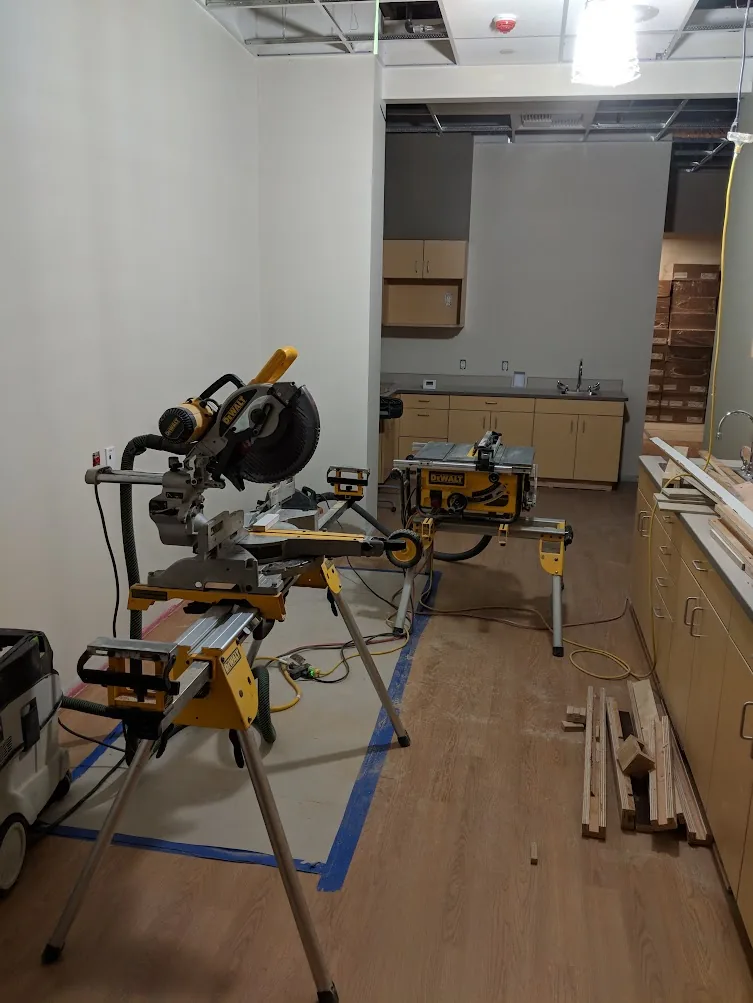
Our DWS780 saw jobsite duty for several years on commercial and residential work: trim, cabinetry, counters, wall panels, doors and general finish carpentry. It was not a saw that lived on a bench waiting for one project a year.
Accuracy held up
The saw stayed square and accurate through our use. We still believe in checking a miter saw with a square—especially after transport—but we did not have a recurring problem with the DWS780 drifting out of adjustment.
The controls are what we miss on cheaper saws
The miter quick-lock is one of our favorite parts of the saw. Lift the handle, move the table, press the handle down and get back to cutting. When you have dozens of pieces and keep changing angles, that convenience is not cosmetic.
We also preferred the DEWALT's larger fences and easier bevel adjustment compared with the RYOBI 12-inch saw we later used on a deck project.
The shadow cut line works
The cut-line shadow is another feature we actually value. It puts a shadow from the blade onto the material, so the indicator corresponds to the blade itself. For finish work, being able to see exactly which side of a pencil mark the blade will take is genuinely useful.
Paired with the DWX724 stand
We used a DEWALT compact stand with this type of setup and found it stable and straightforward to deploy. For a mobile carpenter, the stand is part of the system: it gets the saw off the floor, supports material and makes setup repeatable.
DEWALT DWX724 compact stand ↗Downsides
It is a large 12-inch sliding saw, so it takes more space and money than a homeowner who only makes occasional cuts may need. That is where a less expensive saw can make sense. But for frequent use, we would rather live with the size than give up the faster adjustment system.
Would we buy it again?
After years of real work, the DWS780 is still the style of miter saw we would choose over the RYOBI for repeated professional use. The power was never the differentiator for us; workflow was.