This page is based on our own long-term carpentry, installation, shop or home-project use as described below. We separate what we personally used from alternatives we have only seen or researched.
Quick verdict
Small, simple and much faster than doing angle math in your head.
We have used the compact Starrett-style miter protractor on commercial and residential trim work, decks and other jobs where a corner is not conveniently 90 degrees. We have also seen it used in tile work.
How to use the two scales
Place both arms tightly against the two surfaces that form the angle and let the center dial settle. The tool has two useful readings:
Use this when one workpiece needs to match the measured angle by itself.
Use this when two matching pieces will meet to form the corner. The scale does the half-angle math for you.
Before cutting expensive trim, we remeasure. The compact tool does not lock rigidly in place, so confirming the reading is part of our routine.
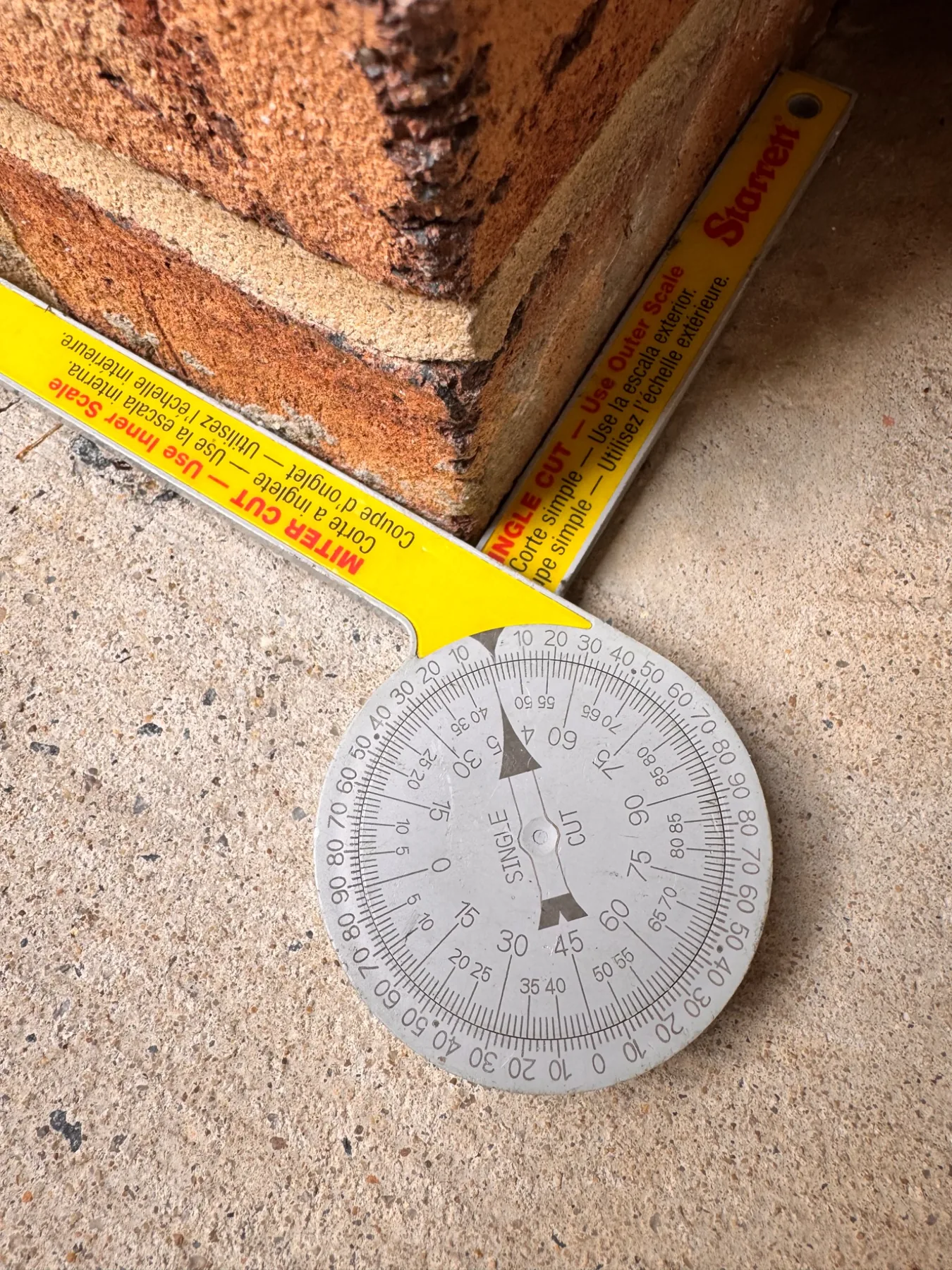
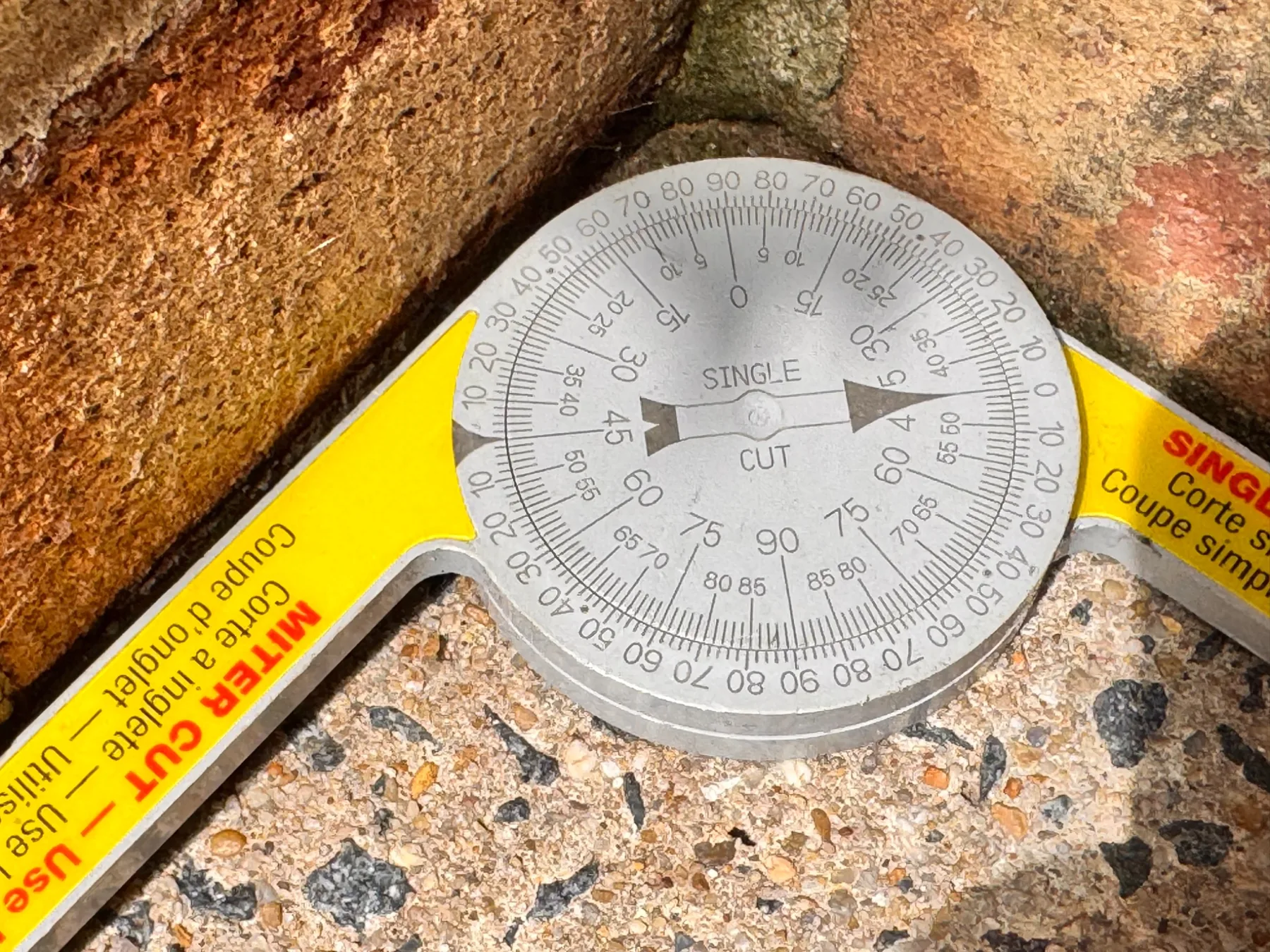
Where we have used it
We have used it across more than eight years of commercial and residential work, including trim and deck layout. We have also seen the same compact style used in tile work, where real corners are often just as imperfect as walls and framing.
Why it is useful on decks
Decks frequently change direction at corners that are not convenient textbook angles. A small protractor lets you capture that real angle and transfer the appropriate setting to a miter saw instead of guessing, recutting and wasting composite or rail material.
Compact versus larger metal versions
The compact plastic version takes very little room in a tool bag. We knew another carpenter who used both the compact version and a larger metal version. The larger tool can make sense when you want more reach or durability, but it also takes more space.
We have even seen a carpenter trim one side of a plastic unit to fit an especially tight location. That is a field modification, not a manufacturer recommendation, and it can reduce the tool's usefulness elsewhere.
The one limitation we actually notice
Because the compact tool does not positively lock the angle, we sometimes take the measurement twice before walking to the saw. That extra check is worth it. A wrong angle on an inexpensive scrap is annoying; a wrong angle on finished trim or composite decking gets expensive quickly.
Would we buy it again?
It has survived more than eight years because it solves a common problem without batteries, apps or calculations. It is the kind of small layout tool that earns its space by preventing one bad cut.