Our small-business coverage is informed by helping operate Olive Plus Sage, a handmade skincare brand that has sold on Etsy since 2019 and through its own WooCommerce store since 2024. We built and manage the website, ecommerce systems, product listings, shipping workflow and related tools. Product claims and current platform details are checked against official documentation.
Quick view: our real packing workflow
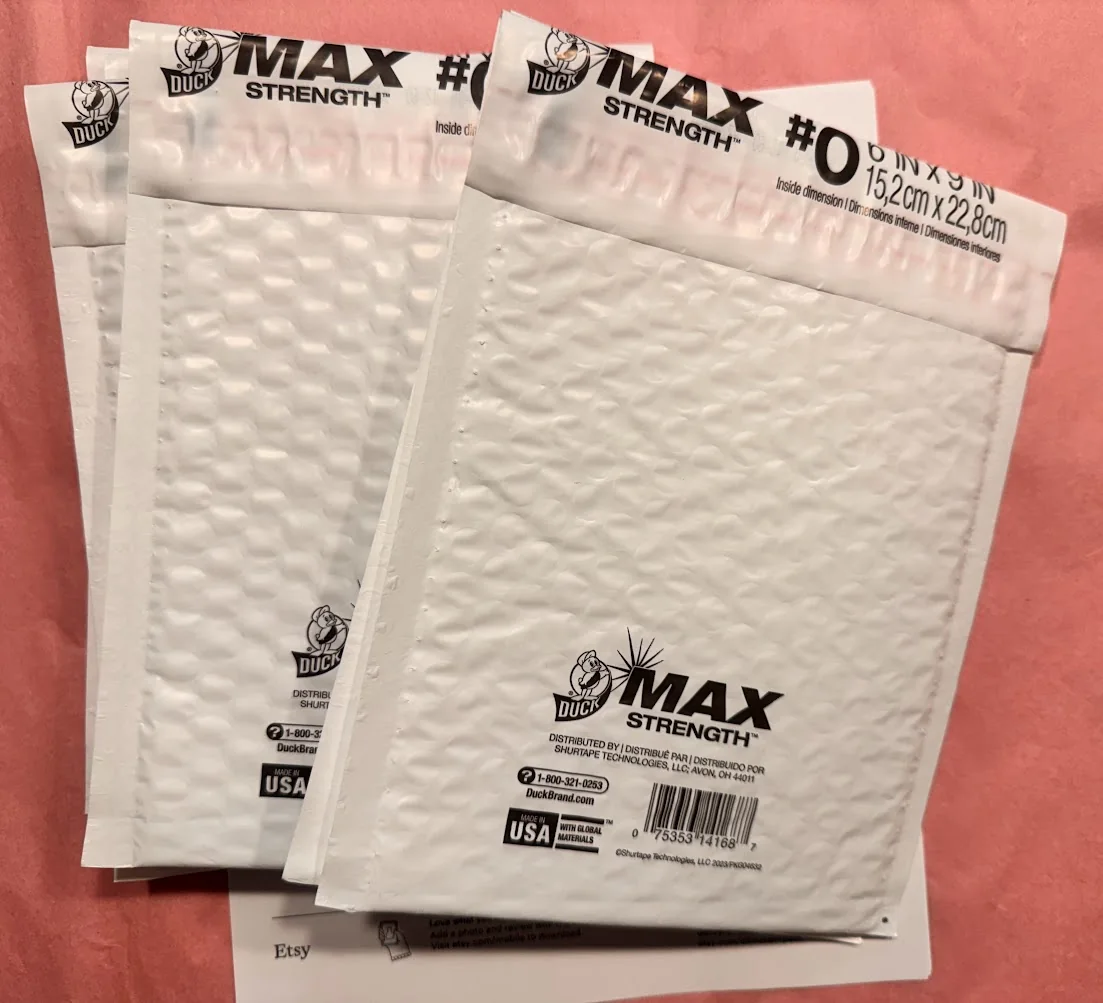
Most smaller orders follow a simple path: print the 4×6 shipping label on the JADENS, prepare any sample or insert, place the order in a 6×9 Duck Max Strength bubble mailer, seal it and apply the label. Larger orders may go into a box. Some Priority Mail shipments go into free USPS padded flat-rate envelopes.
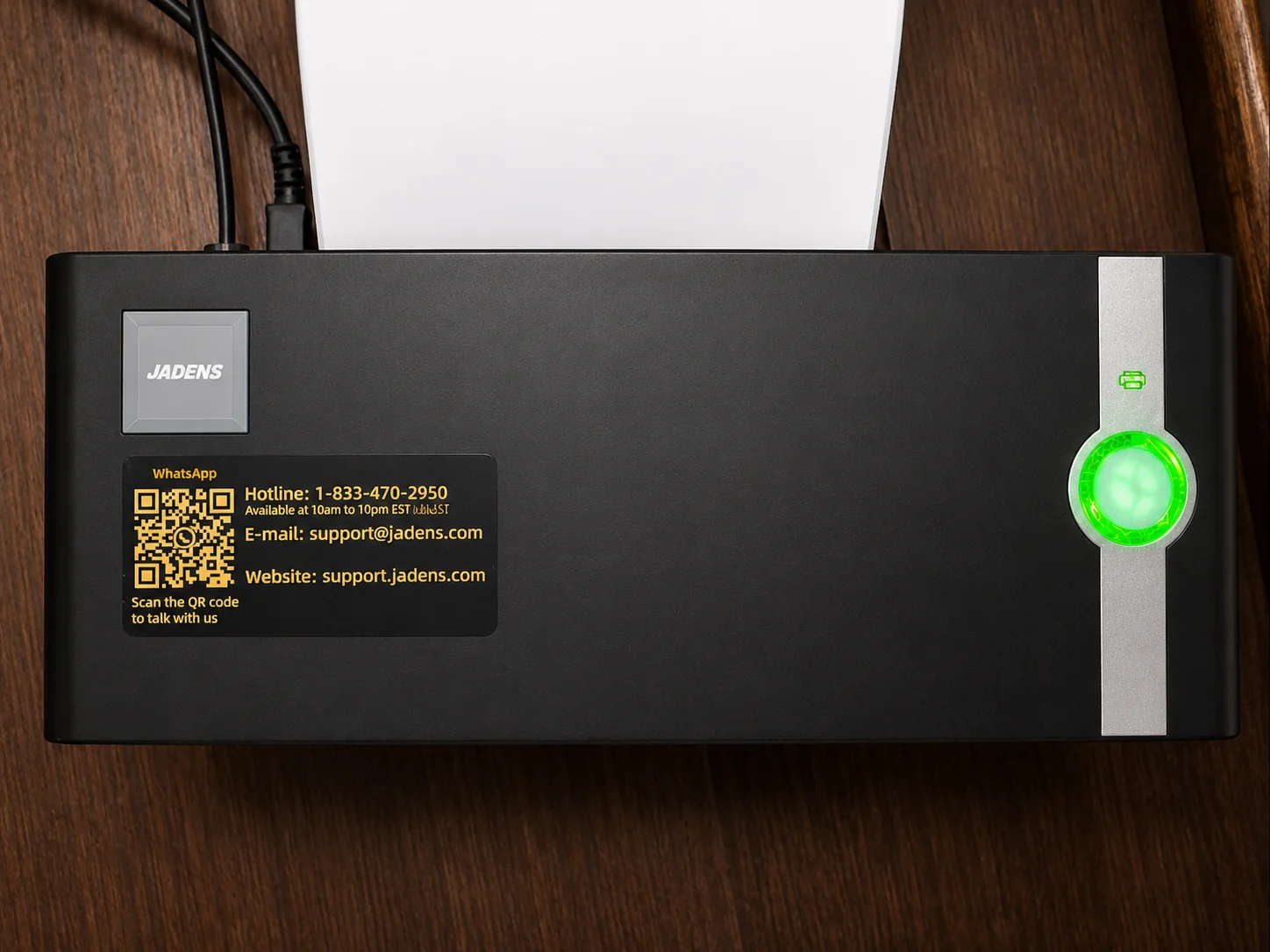
1. JADENS 4×6 thermal printer + fanfold labels
Moving from full-sheet paper, scissors and tape to a thermal printer was one of the biggest workflow upgrades we made. We use 4×6 fanfold labels and print shipping labels for Etsy, WooCommerce, eBay, returns and other shipments.
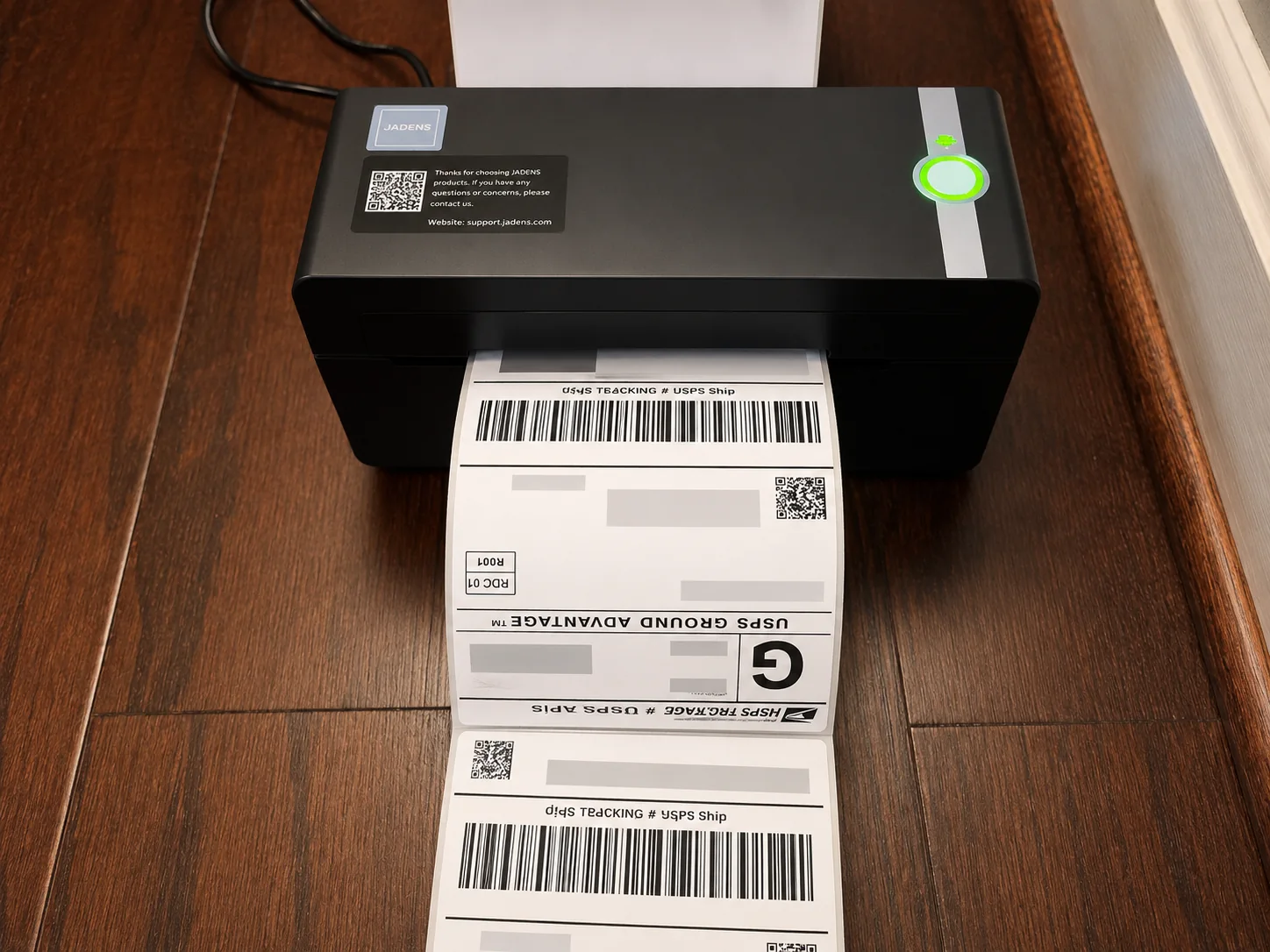
A real run of shipping labels with customer details removed.
2. Duck Max Strength 6×9 bubble mailers
For the majority of our smaller orders, a 6×9 padded mailer is the practical size. It protects the product without forcing us into a box for every shipment. When an order is larger or shaped poorly for a mailer, we step up to a box instead.
The 6×9 Duck mailers we use most often.
See the Duck mailers →We also keep the free USPS Priority Mail padded flat-rate envelopes available for shipments where that service makes sense. Those come directly from USPS rather than being something we buy.
3. Sample bottles + Brother P-touch labels
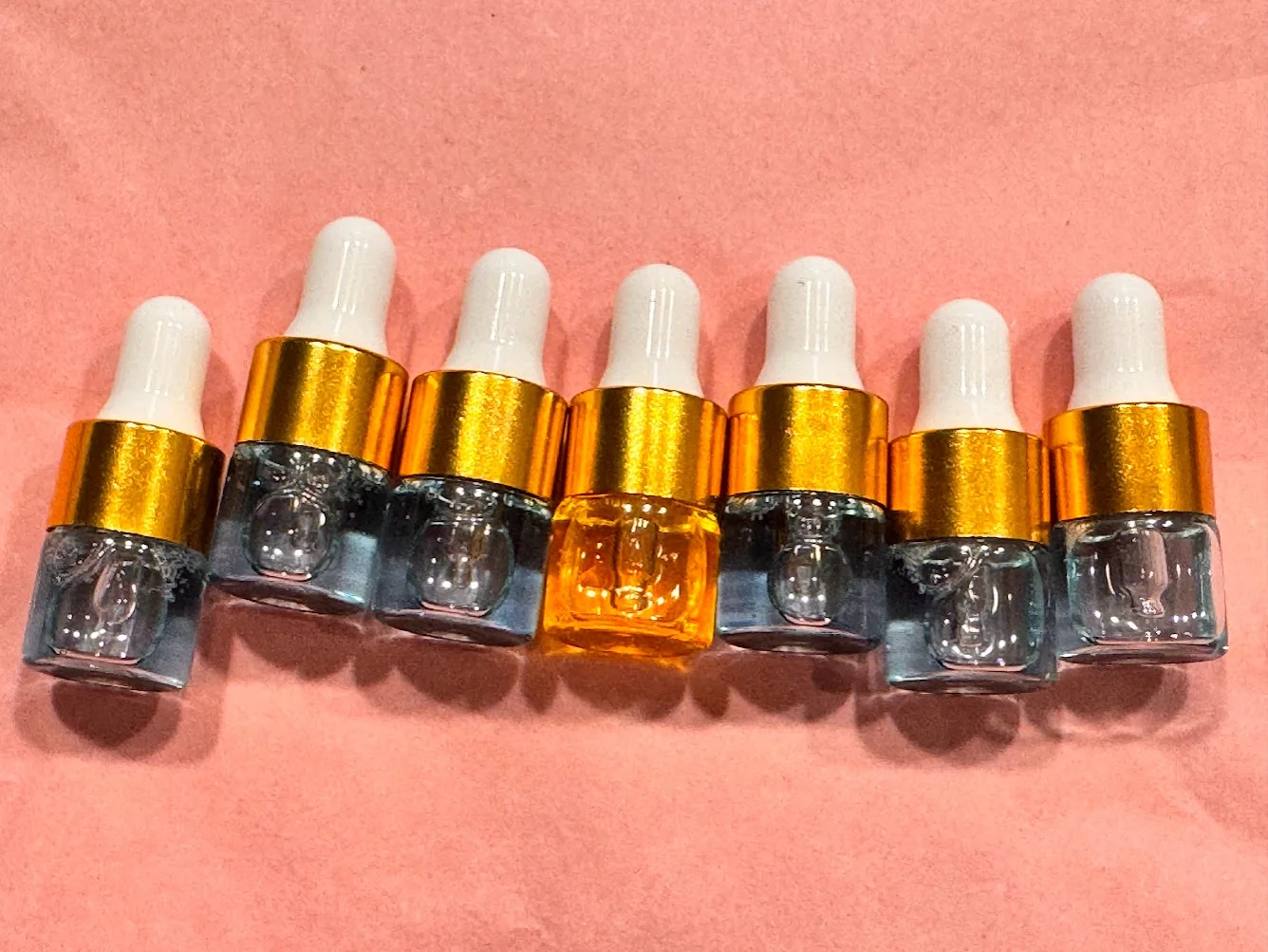
When a skincare order includes a small oil sample, we use miniature glass dropper bottles. We have not had notable problems with the bottles themselves; they have simply been dependable sample containers for the job.
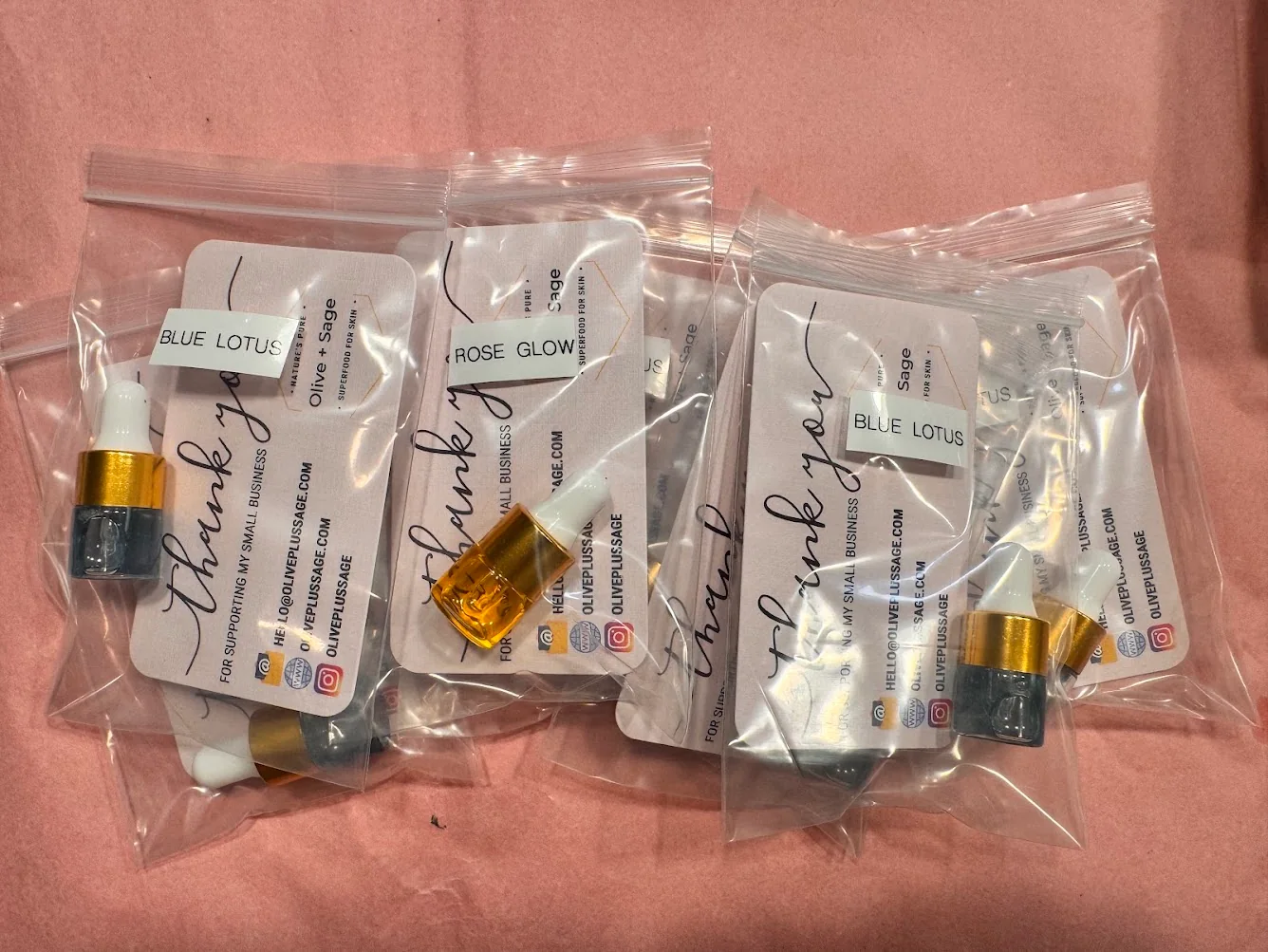
The Brother P-touch PT-D215e handles the small identification labels. It is much better suited to a short product name like “BLUE LOTUS” than the 4×6 shipping printer.
4. Vistaprint cards as package inserts
We use Vistaprint for double-sided business/thank-you cards. Our usual order is 500 cards with a linen finish and rounded corners. An insert is not technically required to ship an order, but it is a simple way to make a small package feel intentional and give a customer a direct route back to the brand.
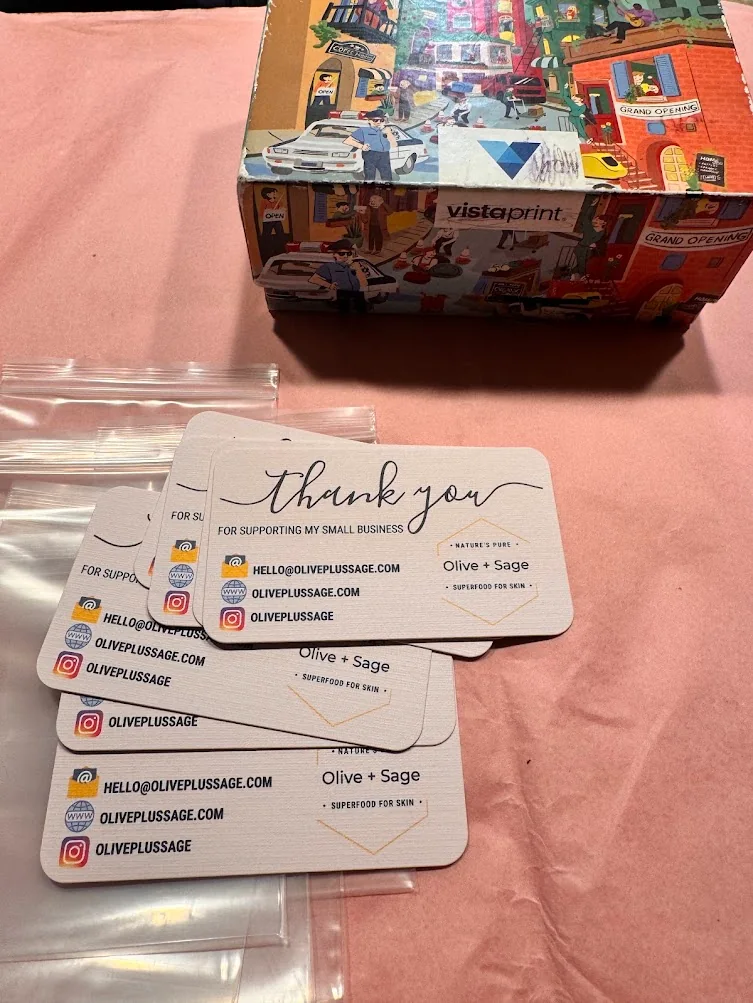
The linen, rounded-corner cards we use as package inserts.
5. Fiskars paper trimmer for inserts and printed pieces
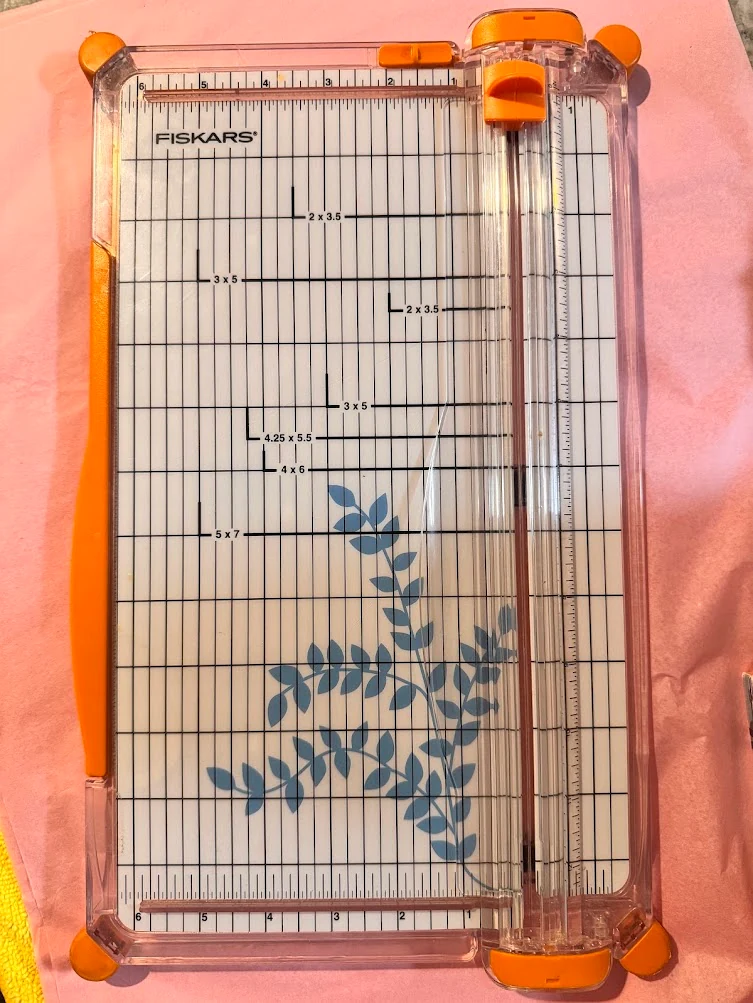
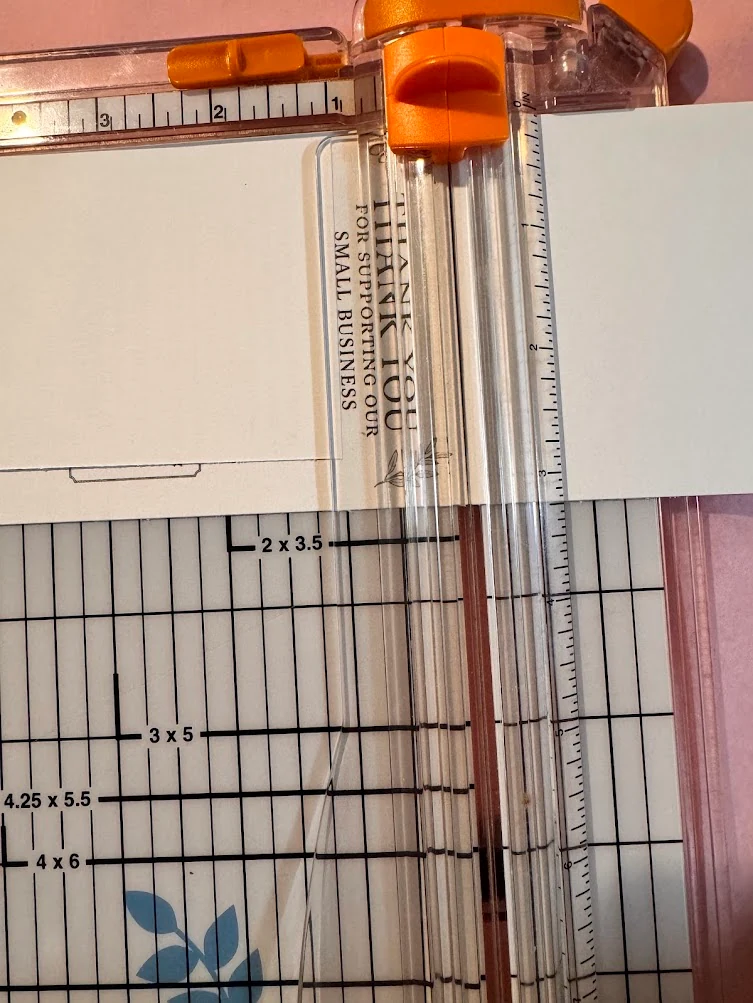
When an insert, promo code, passport-style photo or piece of cardstock needs a clean edge, we use a Fiskars SureCut paper trimmer rather than trying to make repeated straight cuts with scissors. The thin wire along the blade path is especially useful because it shows us where the cut will land before we move the blade.
6. Epson EcoTank for regular documents
A thermal label printer does not replace an ordinary printer. We use an Epson EcoTank ET-3958 for standard paper: ecommerce documents, school work, general printing, scanning and large document batches. The ink has lasted well for us, although the laptop connection can occasionally be frustrating.
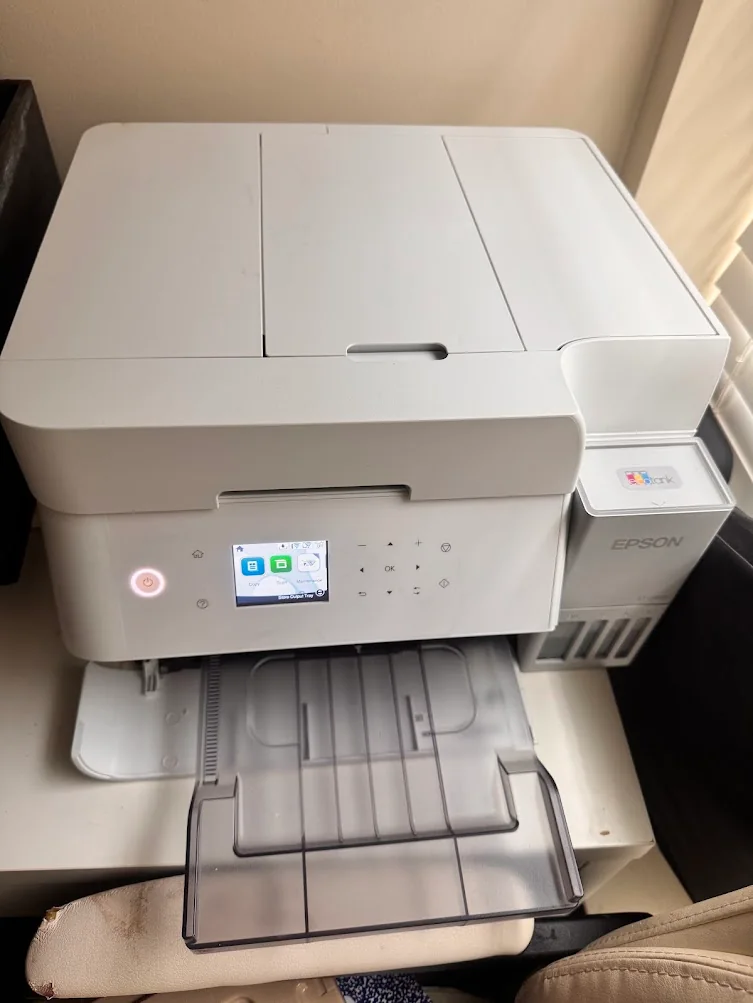
Our ET-3958, used for roughly two years across business and household printing.
What matters more than buying a fancy “shipping station”
The biggest gains came from removing repetitive friction. A thermal label removes scissors and tape. A small label maker prevents handwritten sample labels. A padded mailer avoids unnecessary boxes for small orders. None of these items is exciting on its own, but together they turn packing into a predictable sequence.
If you do something on nearly every order, even a small improvement compounds quickly.
Two scales for two different jobs
We use a larger rechargeable Etekcity Luminary scale when we need package weights, everyday kitchen measurements or larger batches. For oils, butters and cream ingredients that need finer measurement, we switch to the much smaller GDEALER precision scale. Trying to make one scale cover both jobs would mean giving up either capacity or resolution.