This page is based on our own long-term carpentry, installation, shop or home-project use as described below. We separate what we personally used from alternatives we have only seen or researched.
Quick verdict
A capable occasional-use saw with a very good shadow line, but slower angle adjustments than we prefer.
It had enough power for our deck work and cut accurately once squared. We would recommend it more readily to an occasional homeowner than to someone changing miters all day on a professional jobsite.
The project we used it on
The saw was purchased for a May 2023 deck project measuring roughly 15 ft 2 in by 19 ft—about 288 square feet—and it was also used on an accent-wall project. The finished horizontal accent wall shown below is another example of the kind of homeowner finish work this saw was bought to handle. On the deck it cut composite decking and pressure-treated material during resurfacing and railing work.
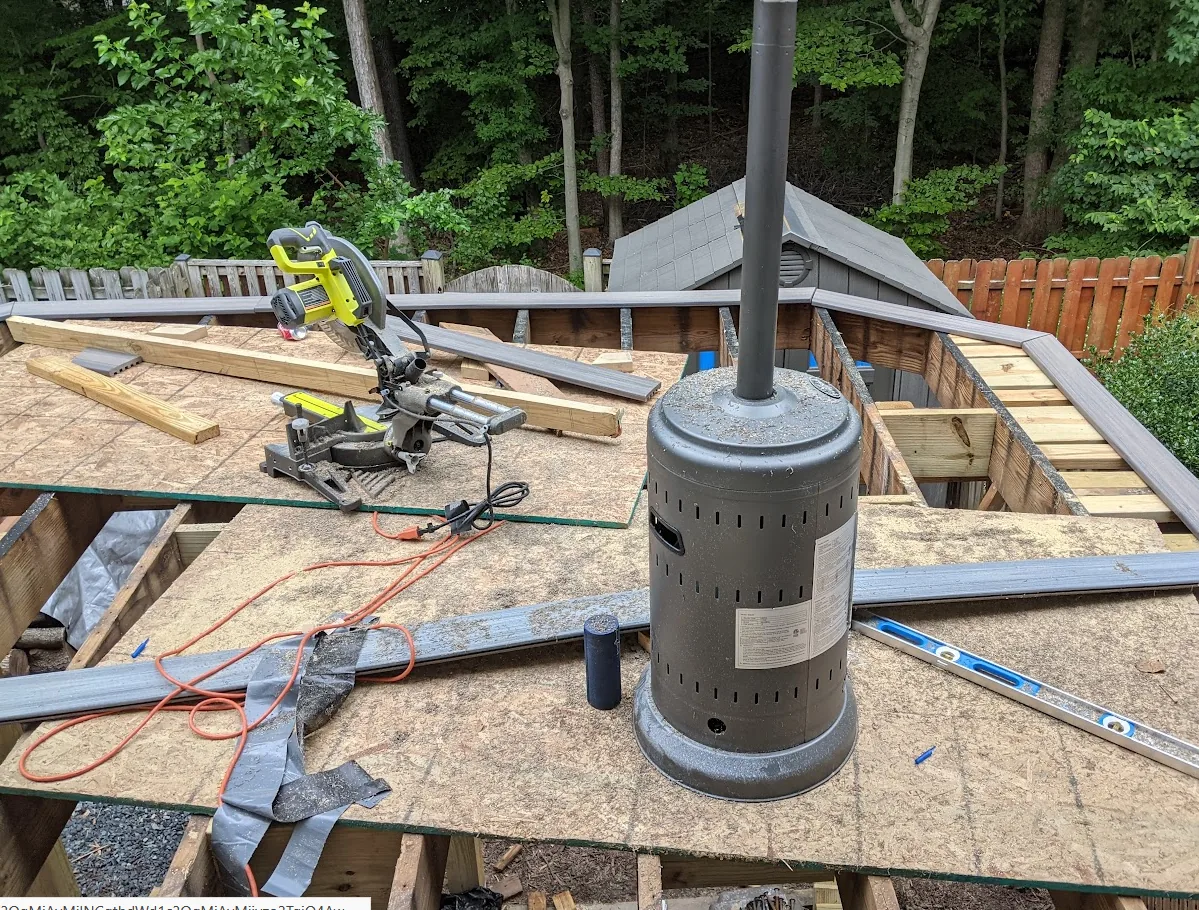
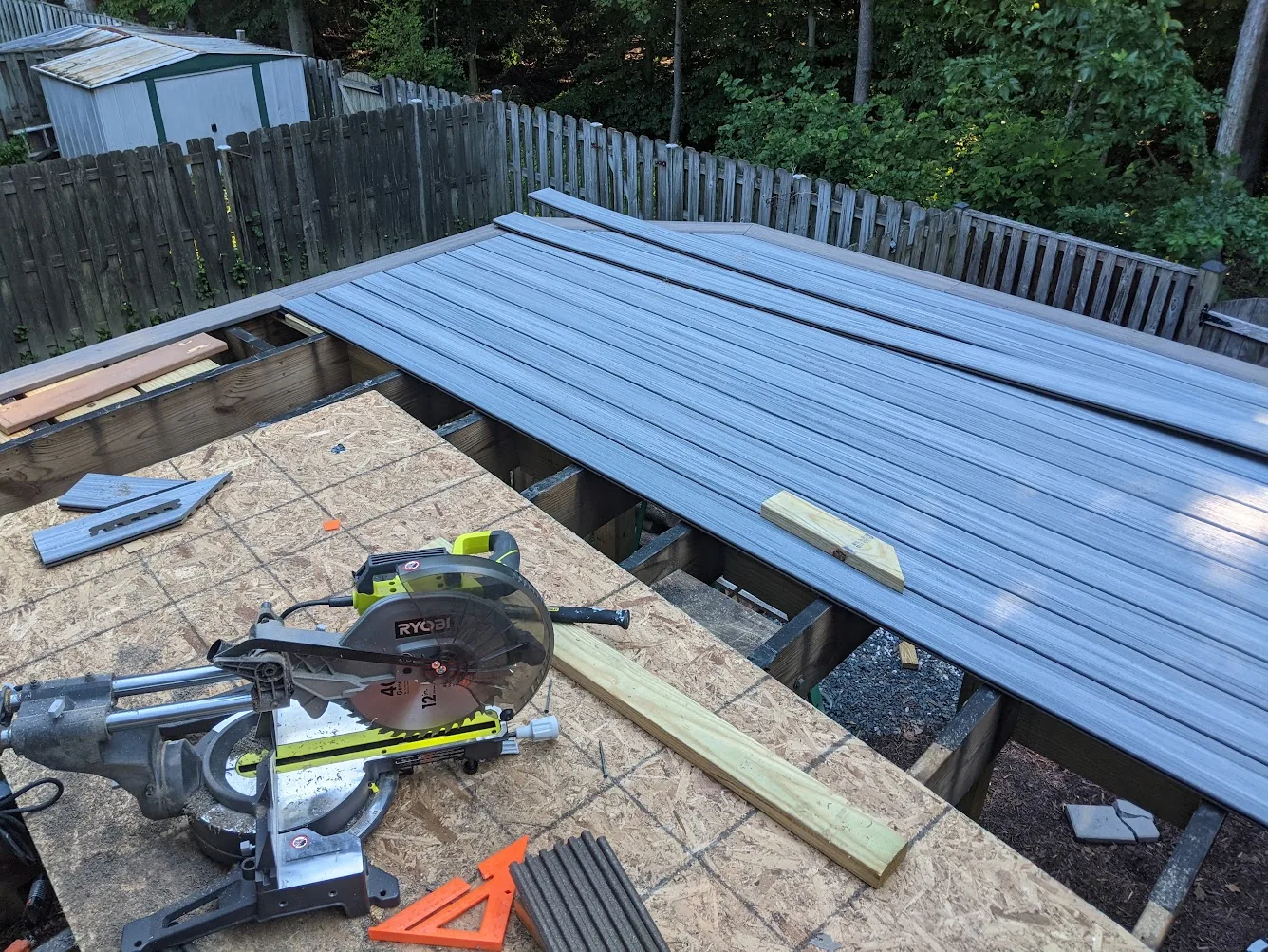
Power was not the problem
We never came away thinking the RYOBI lacked power for this work. For the material and cuts we were making, it did the job. That is why our complaints are mostly about ergonomics and adjustment rather than the motor.
The shadow line is a real strength
The blade-shadow indicator was accurate and easy to understand. It shows the blade's own shadow on the workpiece, which helped line up cuts without depending on a separate laser reference.
Where the DEWALT feels better
The miter control uses a screw/unscrew style knob. It works, but you have to loosen and retighten it each time you change the angle. After using a DEWALT DWS780 with a quick-lock handle, the RYOBI control feels slower. We also prefer the DEWALT's larger fences and bevel access.
Square it before the project
Our practical advice is simple: put a square on the saw before you begin cutting finish material. Check the fence and blade relationship and make the available adjustment if needed. Once we had the setup where we wanted it, the saw did what we needed.
Dust collection was not part of our judgment
We used this saw outside, where dust collection was not a priority, so we do not have a meaningful firsthand opinion on how well its bag or port performs indoors. We would rather leave that blank than pretend we evaluated something we did not care about on this job.
Who should buy it?
If you are building a deck, doing an accent wall or making periodic home-project cuts, this is a legitimate option. If you are doing finish carpentry day after day and constantly changing angles, we would spend more for the faster controls on the DEWALT.