Gear Arena Practical Guides
Norwegian records.
From archive
to family story.
We traced a Norwegian family line through Digitalarkivet, original church books, local Vågå farm history, certified Arkivverket records, modern Kartverket maps and U.S. records—showing the research chain instead of filling gaps with guesses.
from Norway
Research path
How the pieces connected.
The useful part was not one database. It was learning how to move from an American family clue to the Norwegian original record—and then back into U.S. records after emigration.
Find Norwegian ancestors with Digitalarkivet
Search people, open the original parish-register scan, follow farm names, ask the local historical society when a place name stalls, verify the farm history, and map the identified holding.
Follow our workflow →Certified recordsOrder certified copies from Arkivverket
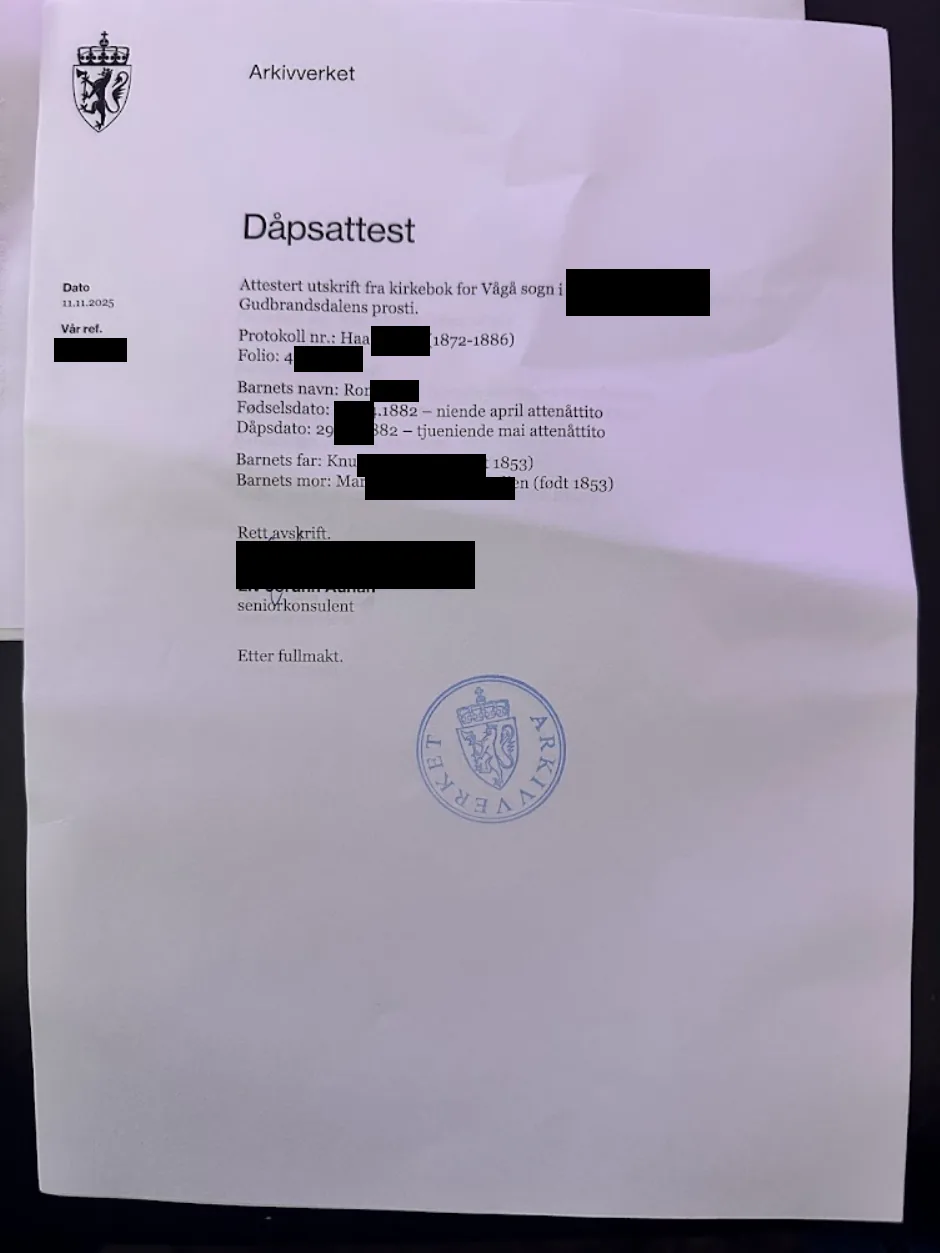
The exact information we supplied, the archive references we included, the redacted request, and the stamped paper record that arrived from Norway.
See the request process →After emigrationContinue the family in U.S. records
Once the family leaves Norway, census, naturalization, immigration and archival records can help connect the American generations.
Open U.S. records hub →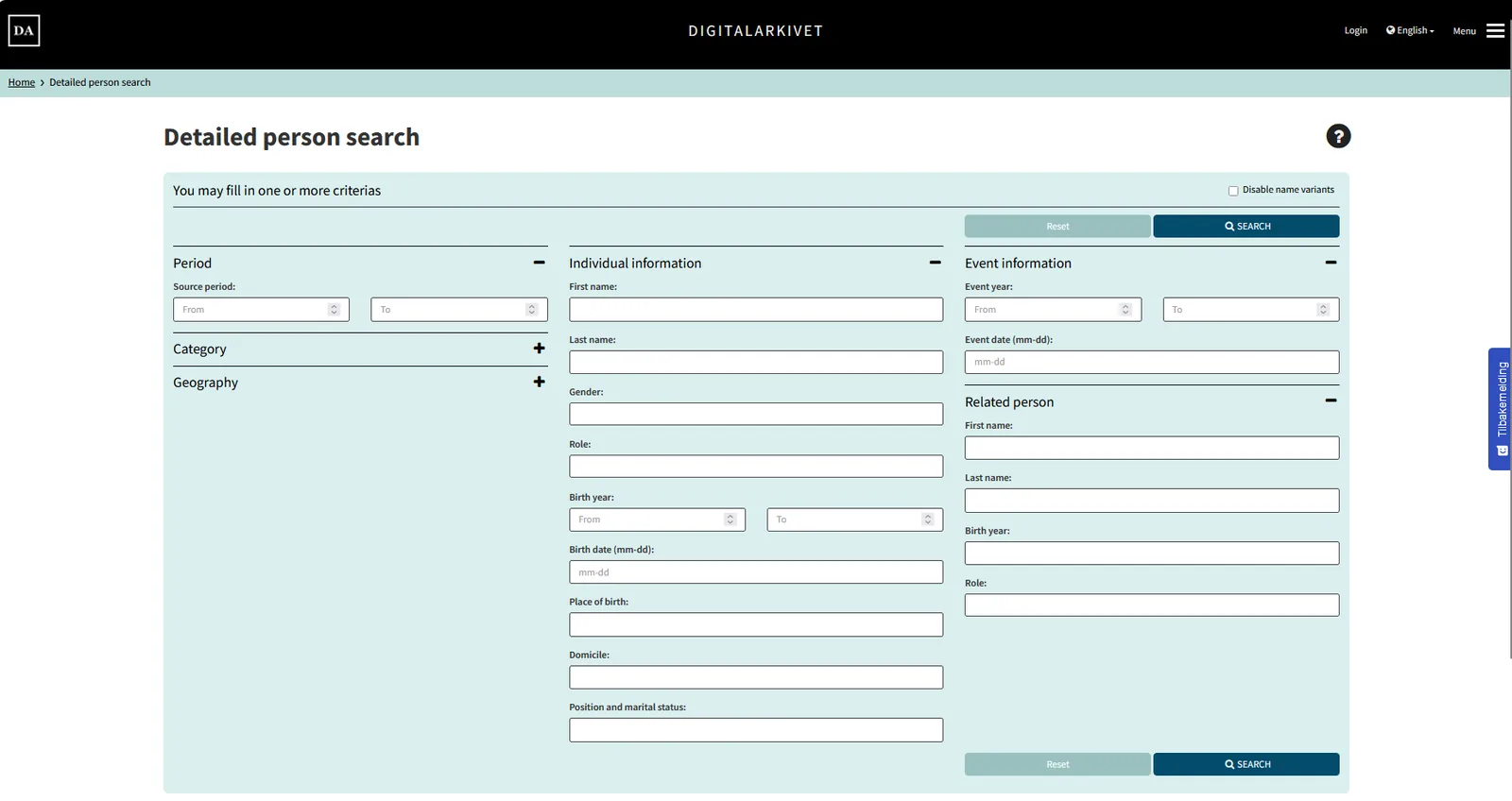
The starting point
Search the index. Then open the original.
Digitalarkivet made it possible to search names, dates, places and related people, but the important step was opening the digitized church-book page and recording the exact archival reference. Norway's National Archives describes parish registers as key first-hand genealogy sources and notes that they can contain parents, homesteads, witnesses and other family clues.
That exact source trail is what later let us ask Arkivverket for certified copies instead of sending a vague genealogy request.
From a farm name to a place
We used Norway's official maps too.
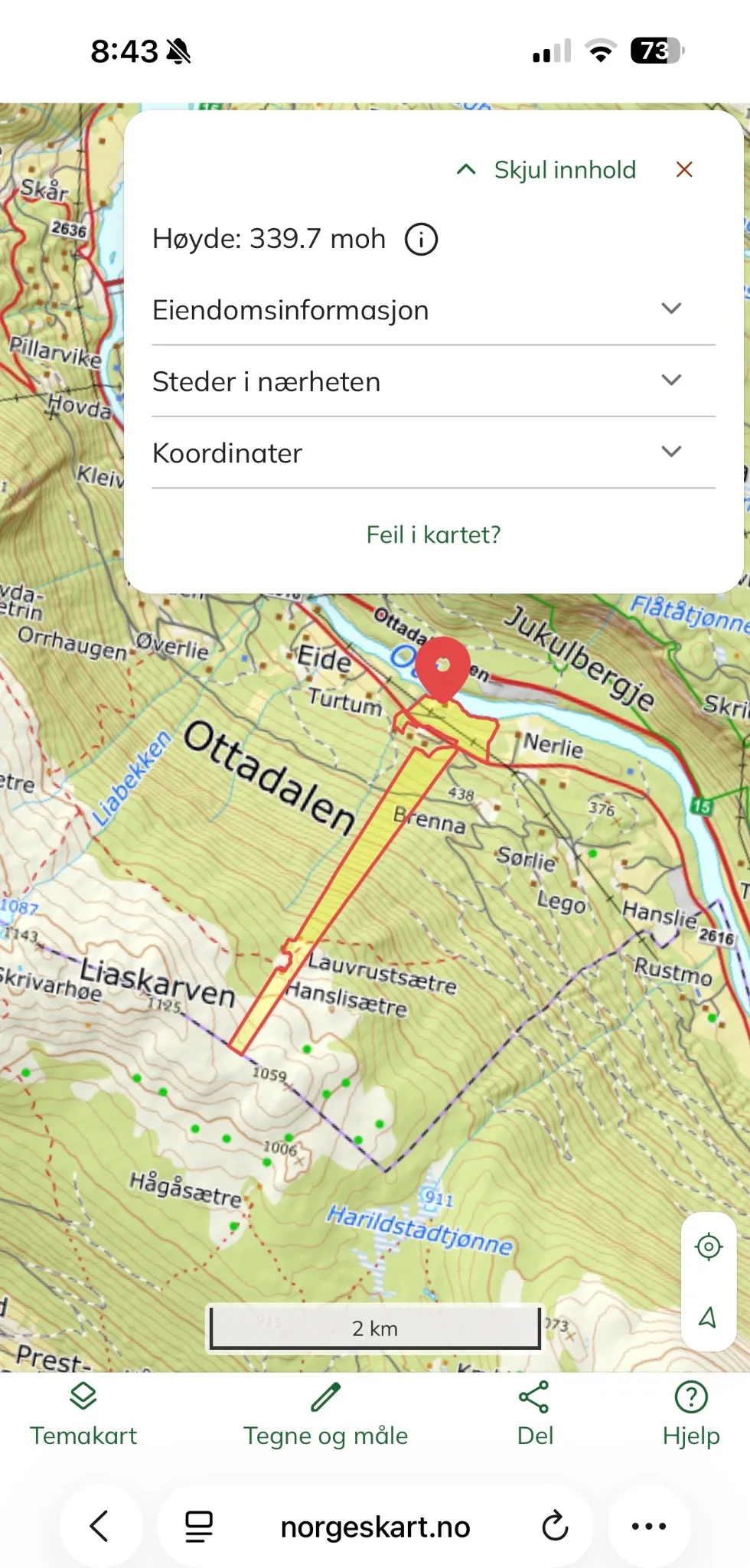
After the historical records gave us place and farm clues, we used Kartverket's property tools and Norgeskart to locate the modern area. Kartverket allows property searches by address or municipality plus gårds- og bruksnummer, and Norgeskart can display the property in map context.
Important: a modern parcel outline is a location clue—not proof that an ancestor owned that exact modern parcel in the 1800s. Older property boundaries and subordinate farm places can change over time. Historical ownership needs historical land or registration records.
Firsthand evidence
We actually ordered the records.
The archive request asked for certified copies of four Vågå church-book entries and included exact Digitalarkivet references. We then received certified paper documentation from Arkivverket in the United States.
Exact archive references
We supplied parish, event details, source books and Digitalarkivet links so the archivist could identify the entries precisely.
Certified paper copies
We asked for visible certification or a stamp and for the documents to be mailed to the U.S.
Original-register context
The digitized register pages let us verify that the indexed information matched the original historical source.
Cross-border follow-up
Once the Norwegian line was documented, we continued the immigrant family through U.S. records rather than treating the Atlantic crossing as the end of the research.
Official sources
- Digitalarkivet — Detailed person search
- Arkivverket — Tracing your ancestry
- Arkivverket — Parish registers
- Kartverket — Gårds- og bruksnummer
- Kartverket — Eiendomsregisteret
- Kartverket — Norgeskart
Historical genealogy evidence, current property data and legal/citizenship requirements are different things. We label our firsthand experience separately and link to the responsible official sources.