Gear Arena Practical Guides
Canadian records.
Build the chain.
Keep the source.
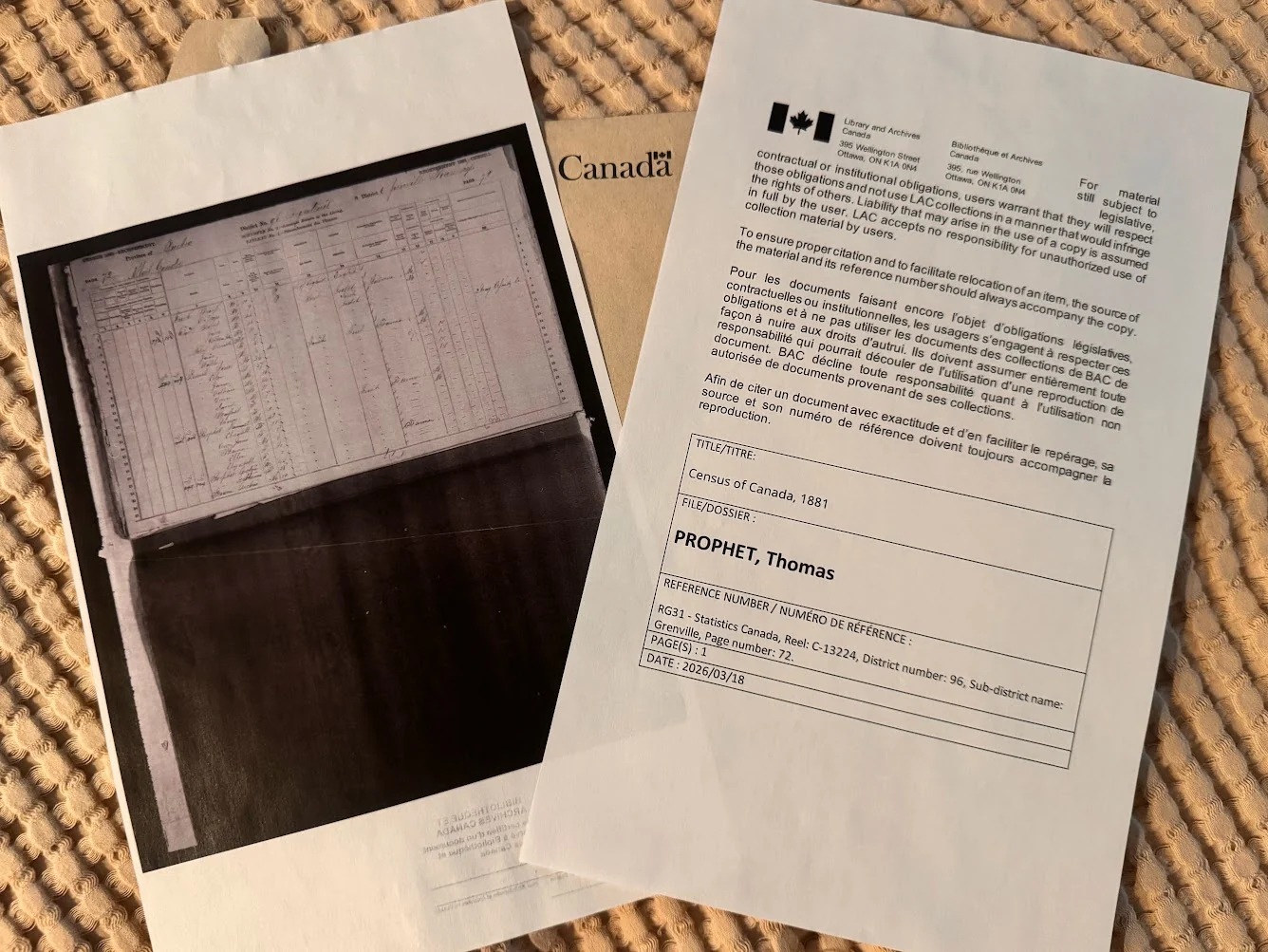
We searched Canadian censuses and church records, contacted archives when a baptism could not be found, ordered archival copies, and connected Canadian records to U.S. passenger and naturalization evidence. This hub shows the research trail—and separates genealogy evidence from current citizenship requirements.
evidence
Research path
Use the record that exists.
Our Canadian line did not come together from one perfect certificate. We had to combine census, immigration, naturalization, church and archival evidence—and document the search when the ideal baptism record could not be located.
Find census, passenger & immigration records
How we used Library and Archives Canada, ordered copies, and followed a Canadian-born ancestor into U.S. passenger and naturalization records.
Follow the records →Missing recordWhen the baptism could not be found
The archive search, written no-record confirmation, sibling and parent records, census, manifest, naturalization and other evidence we assembled instead.
See the evidence chain →Cross-border researchContinue in U.S. records
NARA, USCIS, naturalization, A-Files and other U.S. sources can preserve clues about Canadian birth, nationality and migration.
Open U.S. records hub →Bill C-3 evidence
Current proof rules are source-focused.
Bill C-3 came into force December 15, 2025. IRCC's current proof-of-citizenship instructions say applications involving earlier generations must be supported by authentic, reliable and verifiable documents for each relevant generation, issued by the authority that created or keeps the record.
Original authority matters
IRCC says third-party genealogy records alone are not enough when an official record should exist. Genealogy sites are useful for finding the trail; the application evidence should come from the original authority.
Missing record? Document the search.
If an official record cannot be provided, IRCC says to explain why and show proof that you tried to obtain it—for example, correspondence from the responsible archive confirming that the record is unavailable.
Census & manifests can matter
IRCC's current examples of alternative evidence include census records and boat manifests, along with baptismal, naturalization and other official records.
Certification is not always required
Library and Archives Canada currently says certified copies are not required for Bill C-3 proof applications when LAC is the original authority; downloaded records may be submitted with their source/provenance description. Always follow the current IRCC instructions for your case.
Official sources
- IRCC — Apply for a Canadian citizenship certificate
- IRCC — Citizenship rule changes in effect
- Library and Archives Canada — Ordering copies online
- Library and Archives Canada — Census records
Citizenship rules and document instructions can change. We keep firsthand research examples separate from the current requirements published by IRCC and Library and Archives Canada.