Last verified: September 30, 2026. Official procedures can change; use the linked agency pages when you file.
We requested a deceased relative’s USCIS A-File online in 2025. After an initial request was administratively closed, we corrected the missing-address issue, USCIS accepted the new request, and the responsive records were later delivered through the USCIS online account as a download—not as a mailed paper file or CD.
Start with the current online process
USCIS currently says its online FOIA service is the faster way to request and receive records. Once online-request records are released, the requester can view, download and print them through the USCIS online account. By contrast, the current Form G-639 instructions say mailed Form G-639 responses are sent by U.S. mail and normally on CD-ROM unless another format is requested.
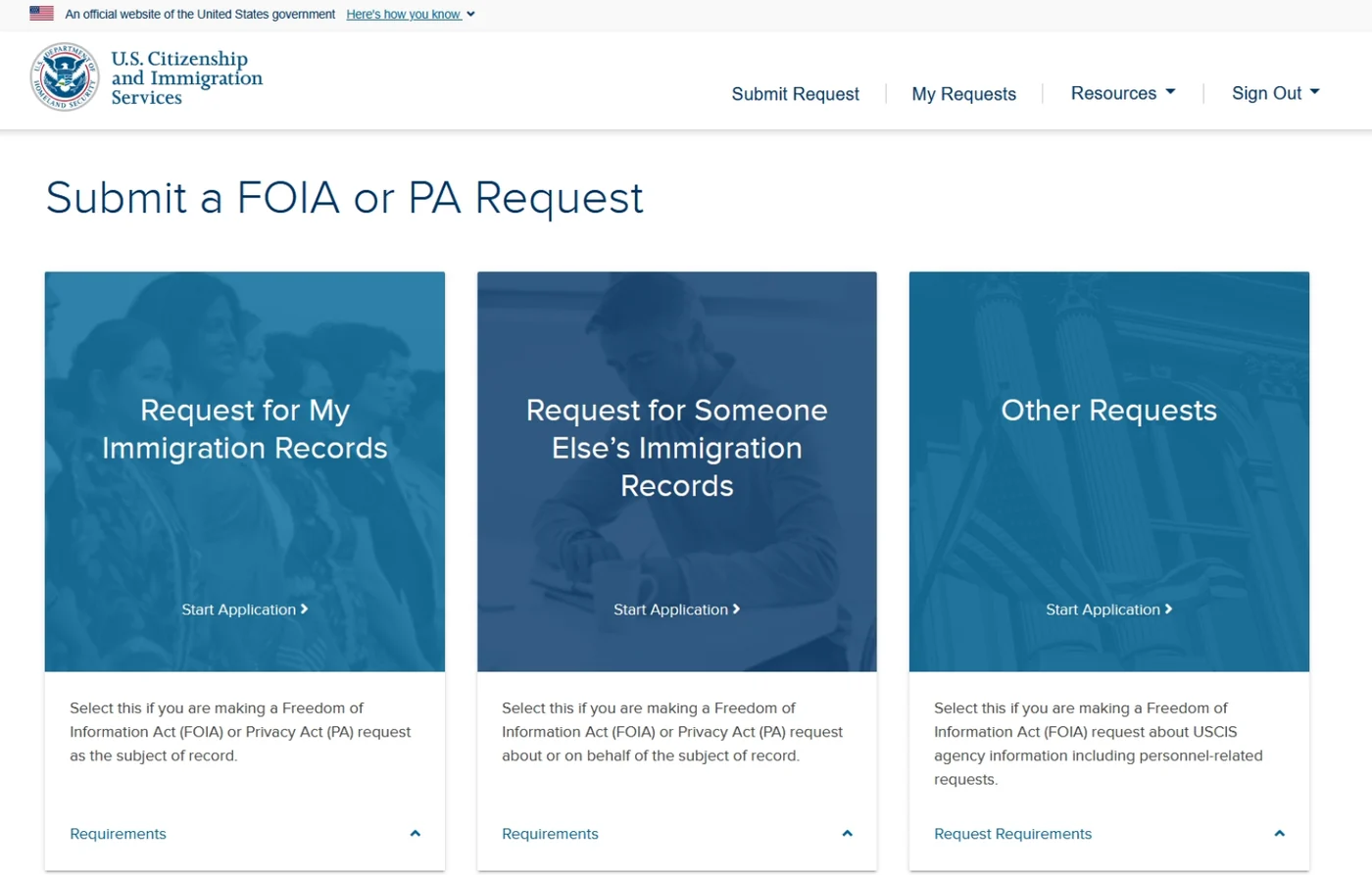
The USCIS online FOIA screen from our request. For our deceased-relative request, we used the option for someone else’s immigration records.
Do not automatically add a cover letter
The problem we hit: the deceased subject’s address
Our first request was administratively closed because USCIS said the subject’s current physical address had not been provided. The subject was deceased, and the online flow we used did not give us a useful deceased-address field. On the next request, we supplied the subject’s last known U.S. address in a signed supplemental letter and explained why it was included.
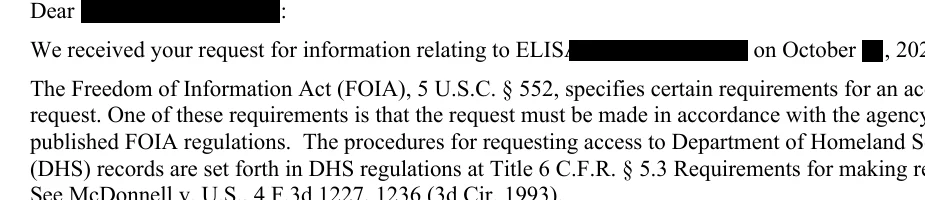
Redacted excerpt from our first USCIS response. The identifying information is removed; the useful part is the stated reason for closure.
Current USCIS FOIA API guidance says identity information for a subject includes full name, current address, and date and place of birth. For a deceased subject, USCIS separately requires proof of death unless the subject was born more than 100 years before the request. Our use of a last known address was the practical correction in our case—not a guarantee that the same workaround fits every request.
Proof of death
USCIS currently lists examples such as a death certificate, obituary, photograph of a funeral memorial or monument, Social Security Death Index screen print, or probate documents filed in court. USCIS says proof of death is not required if the subject was born more than 100 years before the request.
Cross-referenced A-numbers mattered in our case
We had older INS correspondence showing two related A-numbers. We identified both in the corrected request so USCIS had a better chance of locating cross-referenced material. If you find more than one number in old records, preserve the exact numbers and the documents where each appeared instead of deciding on your own that one must be wrong.
How USCIS delivered our A-File
USCIS placed the responsive records in the online account for download. We saved the released file and the agency response letter, printed the full release, and brought the printed set to the German mission in case it was requested. In our particular citizenship case, the downloaded USCIS records were accepted; another procedure can have different evidentiary requirements.
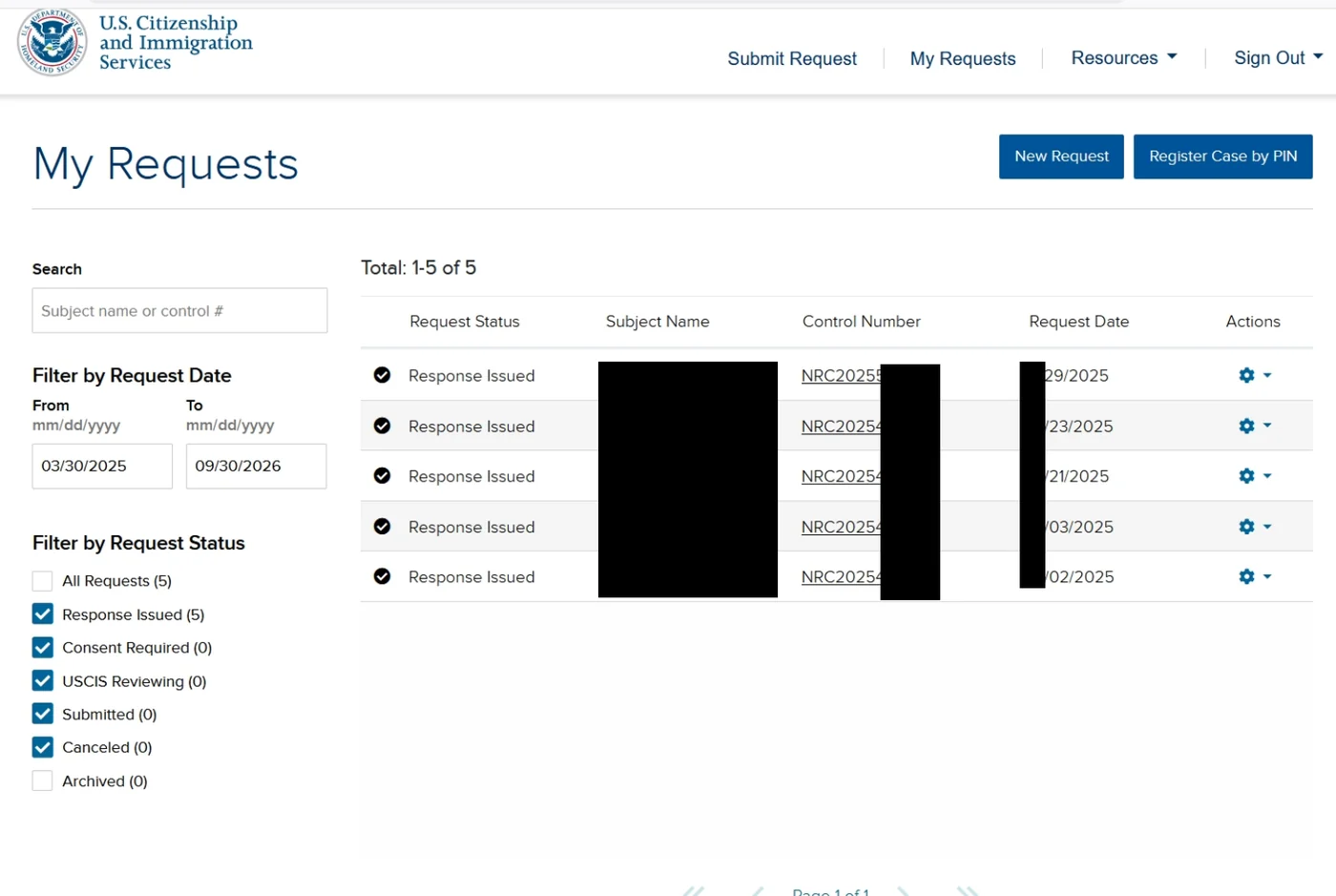
Our USCIS “My Requests” screen after processing. Subject names, control numbers and exact request dates are redacted.
Our final response: 66 responsive pages
The final USCIS letter said the agency identified 66 responsive pages: 29 released in full, 26 released in part, and 11 withheld in full. A partial release does not mean the request failed; it means USCIS located records but applied FOIA exemptions to some information or pages.
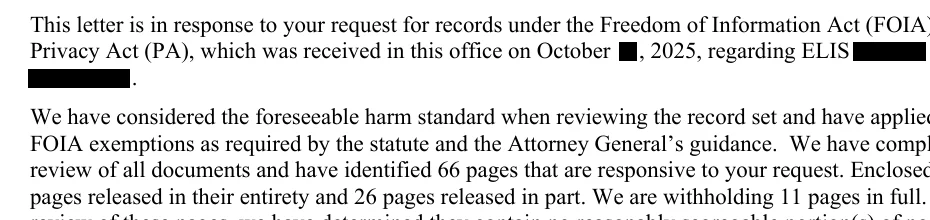
Redacted excerpt from our final USCIS response showing the responsive-page count and release breakdown.
Check NARA before assuming USCIS has the file
NARA’s current A-File page says the National Archives at Kansas City holds a portion of available A-Files for people born in 1918 and earlier, while the National Archives at San Francisco holds a portion for people born in 1920 and earlier from certain former INS district offices. NARA adds transfers over time, so there is no safe one-line birth-year rule. Search the National Archives Catalog for the person before choosing a repository.
The supplemental wording we used after the closure
This is not a universal cover-letter requirement. It is a sanitized version of the kind of supplemental statement we used after USCIS had already told us what was missing.
Related guides
USCIS vs. NARA for an A-File
How to decide which repository to check first, including the current NARA holdings language.
Read guide →Deceased relativeRequest immigration records for a deceased relative
Proof of death, identity information, online delivery and the address issue we encountered.
Read guide →FOIA responseUnderstand a partial FOIA release
What “released in full,” “released in part,” and “withheld in full” meant in our response.
Read guide →Official / primary sources
- USCIS — Form G-639 and current instructions
- USCIS Developer Portal — FOIA request requirements
- National Archives — Alien Files (A-Files)
We separate current source-based guidance from our own family’s experience. Agency custody, forms, fees and procedures can change.