Last verified: September 30, 2026. Official procedures can change; use the linked agency pages when you file.
For a deceased person, identify the record you want, search NARA first when an older A-File may already have transferred, and if USCIS is the correct custodian, use the current online FOIA process. Upload acceptable proof of death and preserve the agency response with the records you receive.
1. Decide whether USCIS is the right custodian
Older immigration and naturalization records are split across NARA, USCIS and sometimes courts or state/local archives. For A-Files, search the National Archives Catalog first when the subject is old enough that a transfer is plausible. If NARA does not hold the file, USCIS may still be the custodian.
2. Use the online USCIS FOIA path when appropriate
USCIS currently says online requests are more efficient than mailing Form G-639. Records released from an online request can be accessed, downloaded and printed through the USCIS online account.
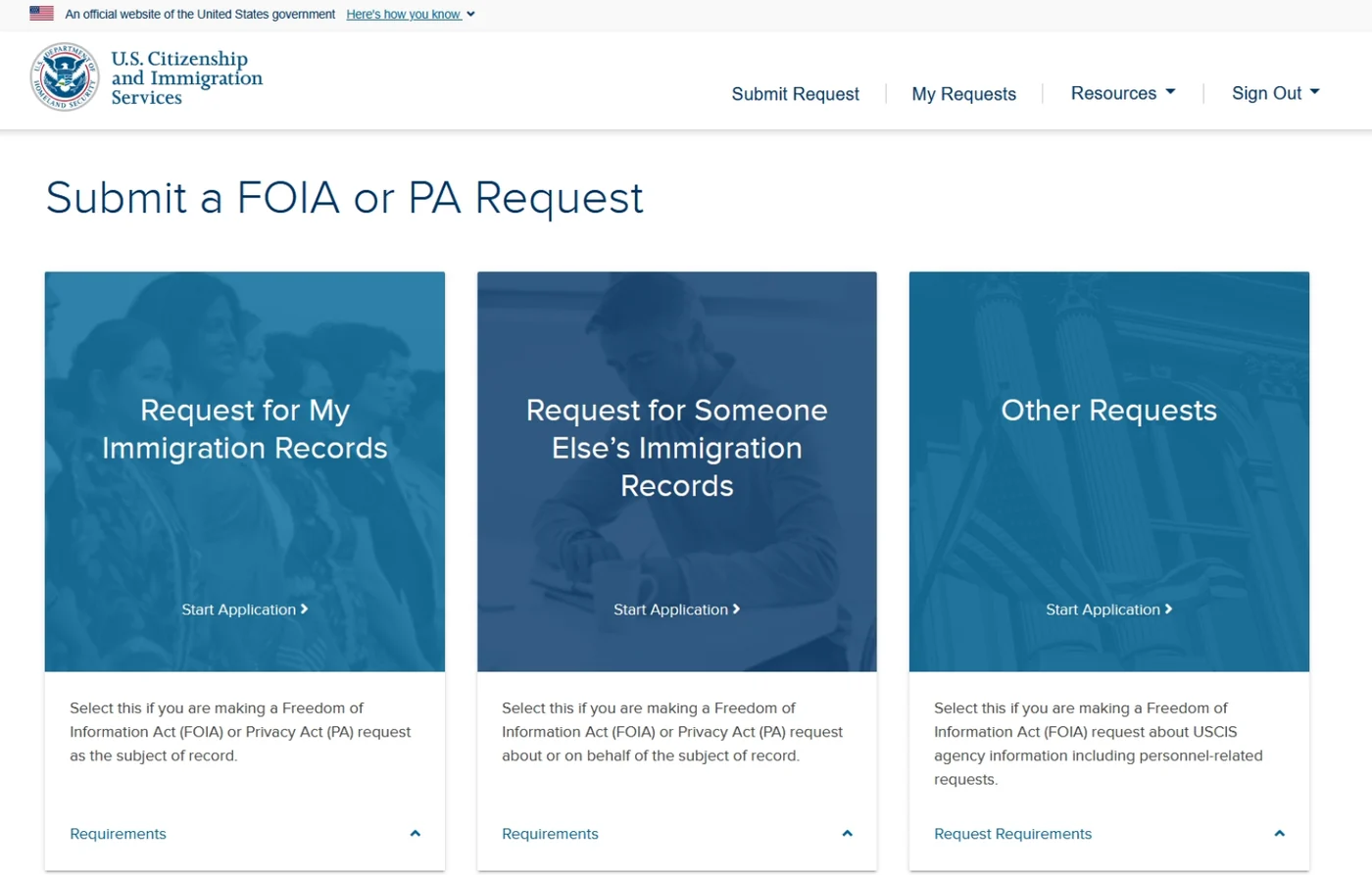
The online USCIS FOIA screen we used for our family request.
3. Upload proof of death
For a deceased subject, USCIS currently lists a death certificate, obituary, funeral memorial or monument photograph, Social Security Death Index screen print, or court-filed probate documents as examples. USCIS says this is not required when the subject was born more than 100 years before the request.
4. Give USCIS enough identifying information
Names, aliases, date and place of birth, A-number if known, and address information can help distinguish the correct record. In our case, the first request was closed because USCIS said the subject address was missing. We corrected the new request by supplying the deceased person’s last known U.S. address in a signed supplemental statement.
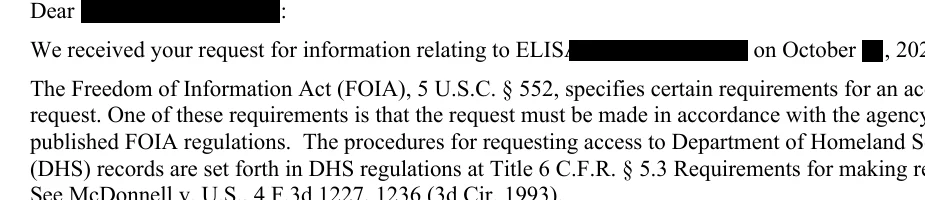
Our first request taught us not to assume a deceased-relative workflow will automatically handle every identity field.
5. Do not add unnecessary documents
Current USCIS developer guidance specifically says representatives should not send an unnecessary cover letter merely to request an A-File or specific document and should not include unrequested documents such as driver’s licenses or passports. Our supplemental letter was used only after a specific deficiency appeared in our case.
6. Save the response letter with the release
Our records were provided through the online account. We kept the downloaded records and the final USCIS response letter together, then printed the full release for our German citizenship appointment. The response letter documented exactly how many pages were responsive and how many were partially or fully withheld.
Related guides
Our complete A-File request
See the full failed-request → corrected-request → online-release sequence.
Read guide →Repository choiceUSCIS vs. NARA
Use the record date, catalog and file type to decide where to start.
Read guide →A-File contentsWhat can be inside an A-File?
What NARA says A-Files may contain, plus what our release looked like.
Read guide →Official / primary sources
- USCIS — Form G-639 and online-request instructions
- USCIS Developer Portal — FOIA request requirements
- National Archives — Alien Files (A-Files)
We separate current source-based guidance from our own family’s experience. Agency custody, forms, fees and procedures can change.