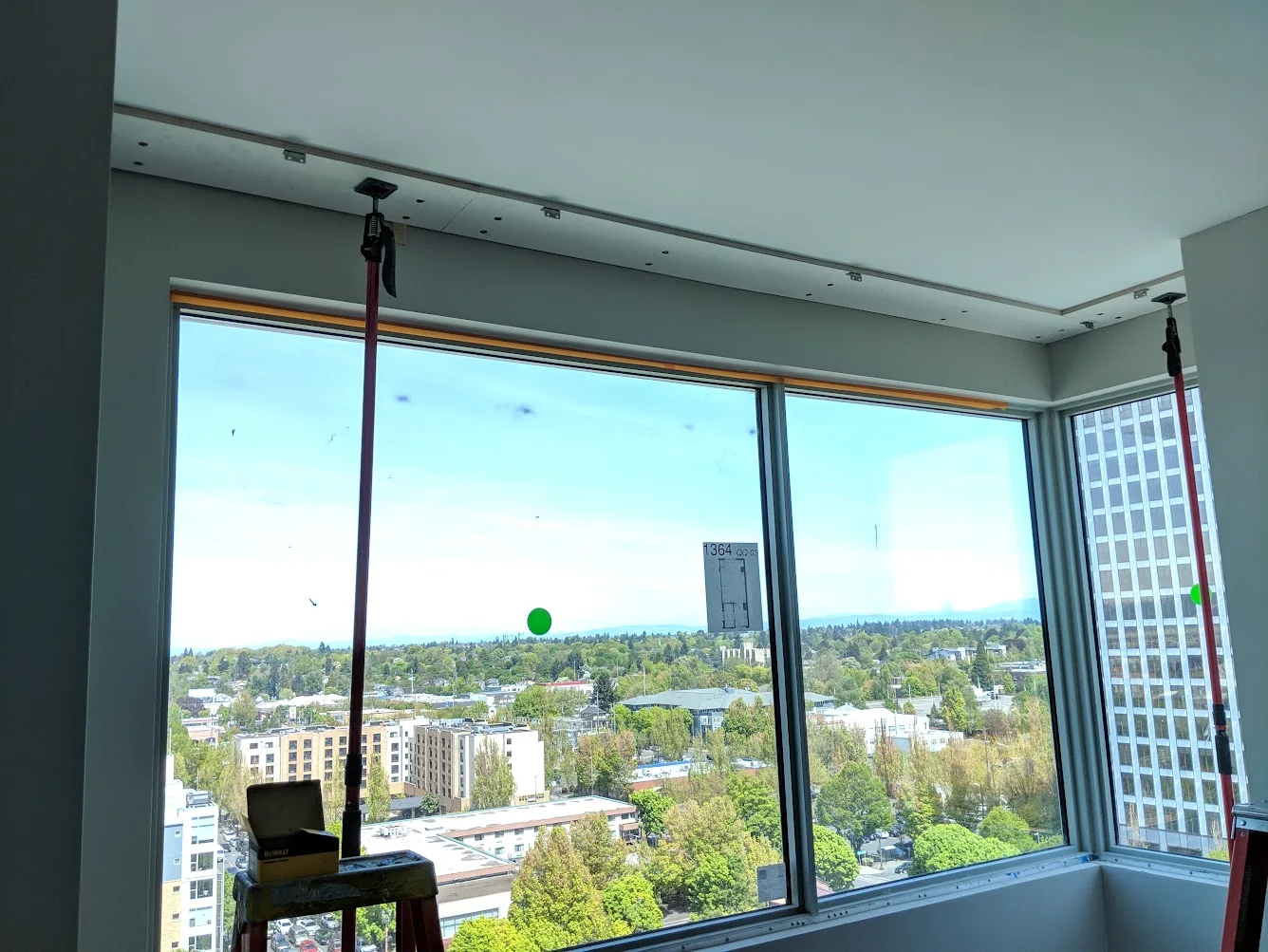
This review is based on our own professional installation use. The tall FastCap 3rd Hand poles shown on this page are from real jobsite work. We also used the shorter Little Hand version for upper-cabinet installation, and we later found surviving photos of the Little Hand cabinet-support setup shown below.
Quick verdict
Simple tools that can make one-person installation work much easier.
The FastCap 3rd Hand and Little Hand are lightweight, collapsible support poles that lock firmly and allow useful fine adjustment. They are especially handy when you need a temporary extra set of hands to hold an upper cabinet, valance, trim piece or other work in position while you level, drill or fasten it.
What we liked
- Very easy to set up and adjust
- Fine/micro-adjustment helps dial in final position
- Solid once locked in place
- Useful when working without a second installer
- Lightweight compared with a site-built wood brace
- Collapse down for transport and storage
- Tall and short versions cover different jobs well
- We did not notice the pads marking cabinets or ceilings
What to watch
- The end pads need to be seated carefully during setup
- A poorly positioned pad can shift before everything is locked in
- For delicate finishes, adding painter's tape or padding is cheap insurance
- FastCap is not the only brand that makes this type of support pole
We used both the tall 3rd Hand and the shorter Little Hand
The two sizes solve different versions of the same problem. The taller FastCap 3rd Hand makes sense when the support point is near a ceiling or overhead area. The shorter Little Hand is much better suited to cabinet-height work.
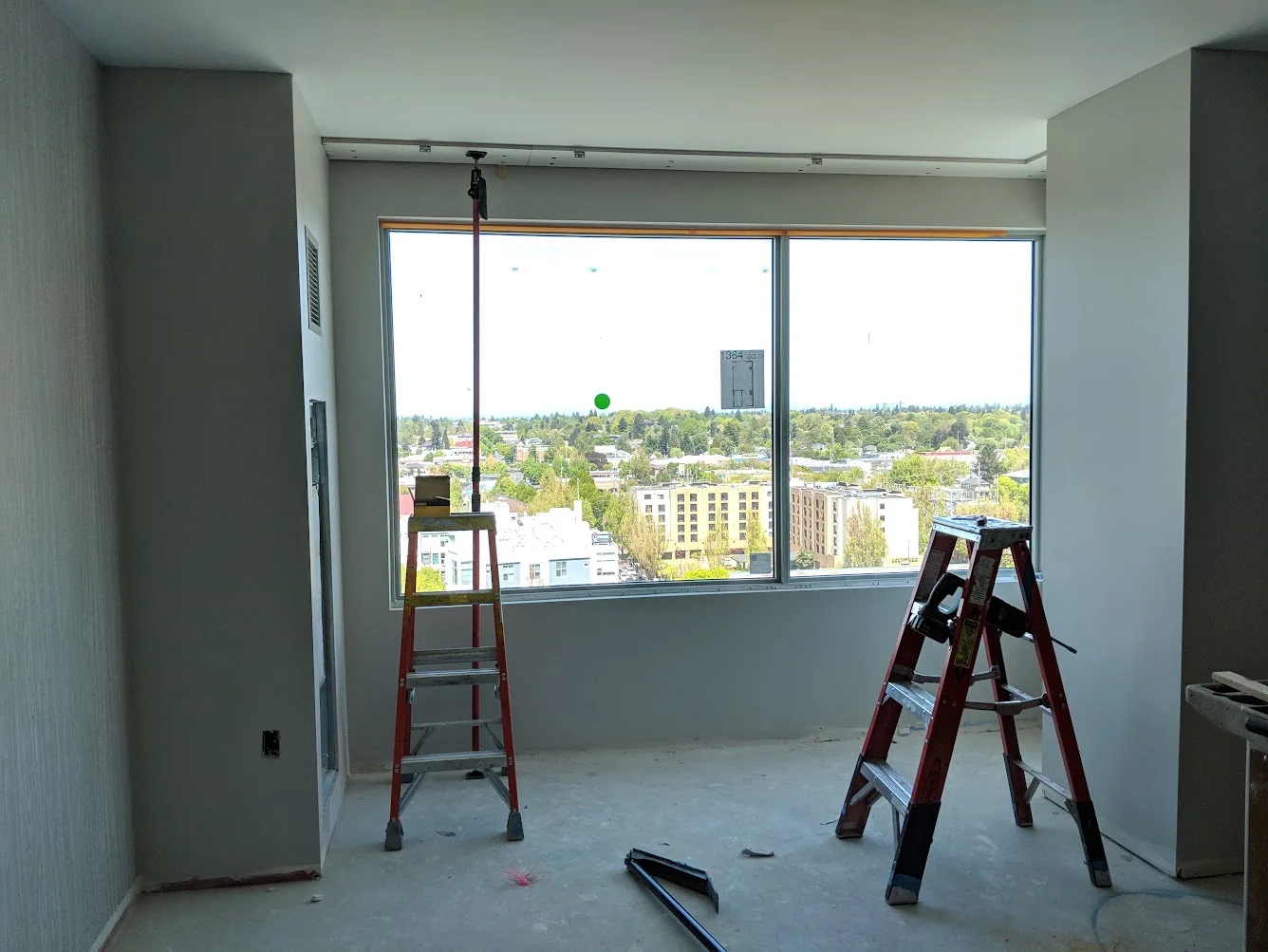
We used these for trim work and for holding a curtain-valance board overhead during a Hyatt hotel build while drilling into concrete and securing the valance in place.
We used the shorter version under upper cabinets, raising and micro-adjusting the cabinet to the level/layout line before fastening it to the wall.
Where the tall version earned its keep
One of our clearest use cases was a hotel interior installation. We needed to hold a curtain-valance board in position overhead while drilling into concrete and securing it permanently. A temporary support pole let the installer concentrate on alignment and fastening instead of trying to hold the material at the same time.
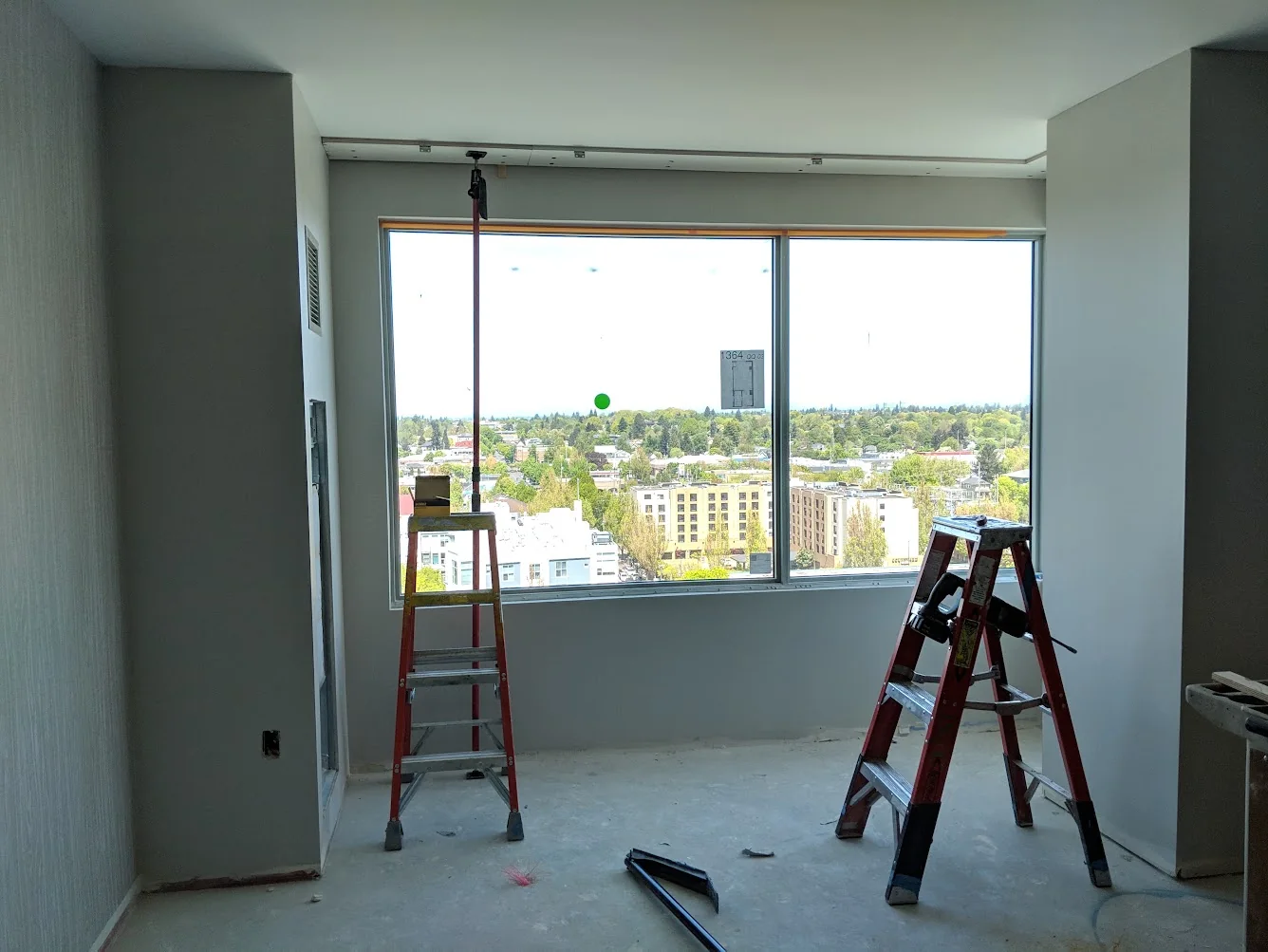
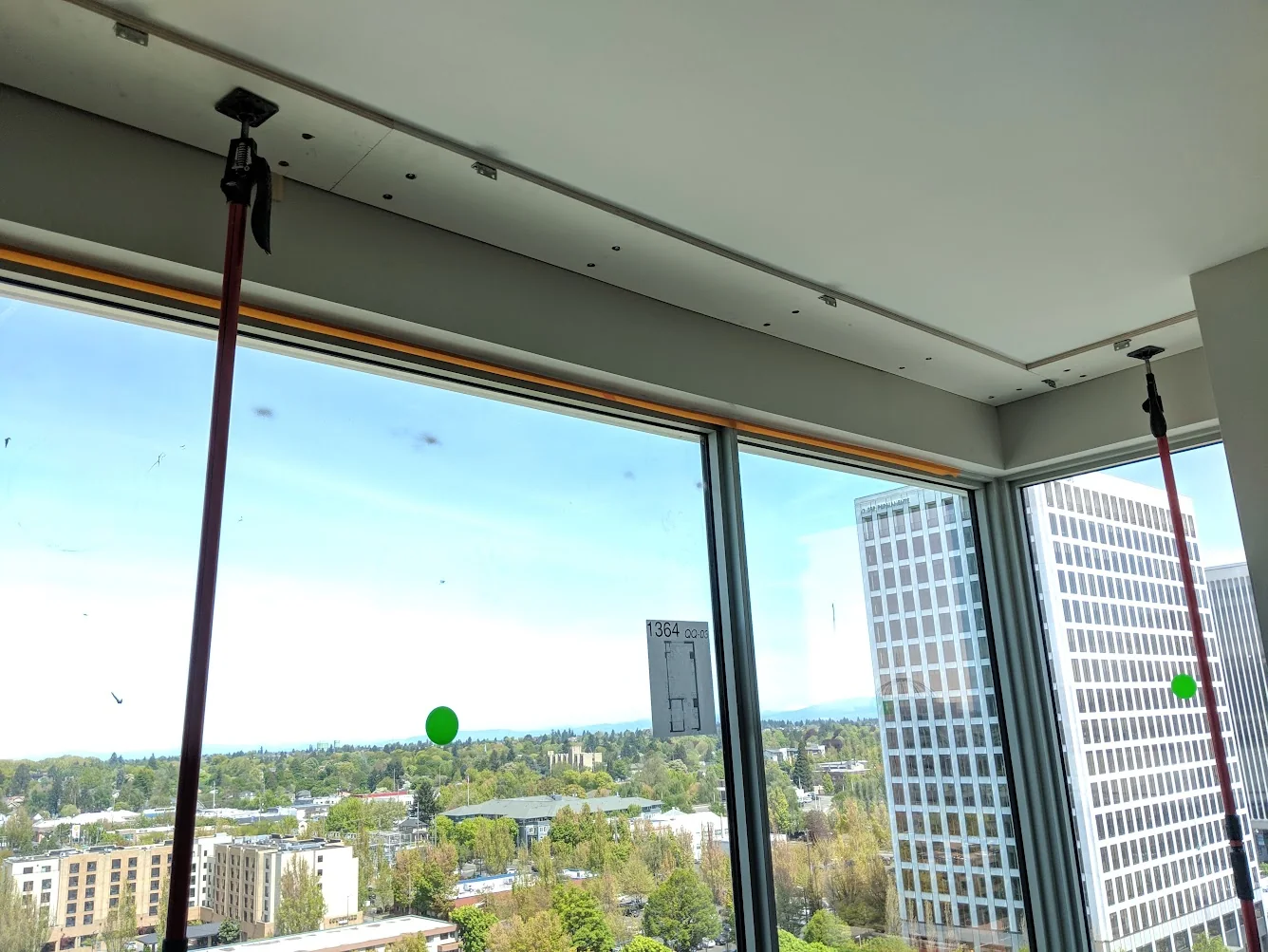
The Little Hand was particularly useful for upper cabinets
For cabinet installation, the shorter support was often the more useful size. We could place it under an upper cabinet, bring the cabinet up toward the layout or laser line, then make small height adjustments while checking level and alignment before securing the cabinet.
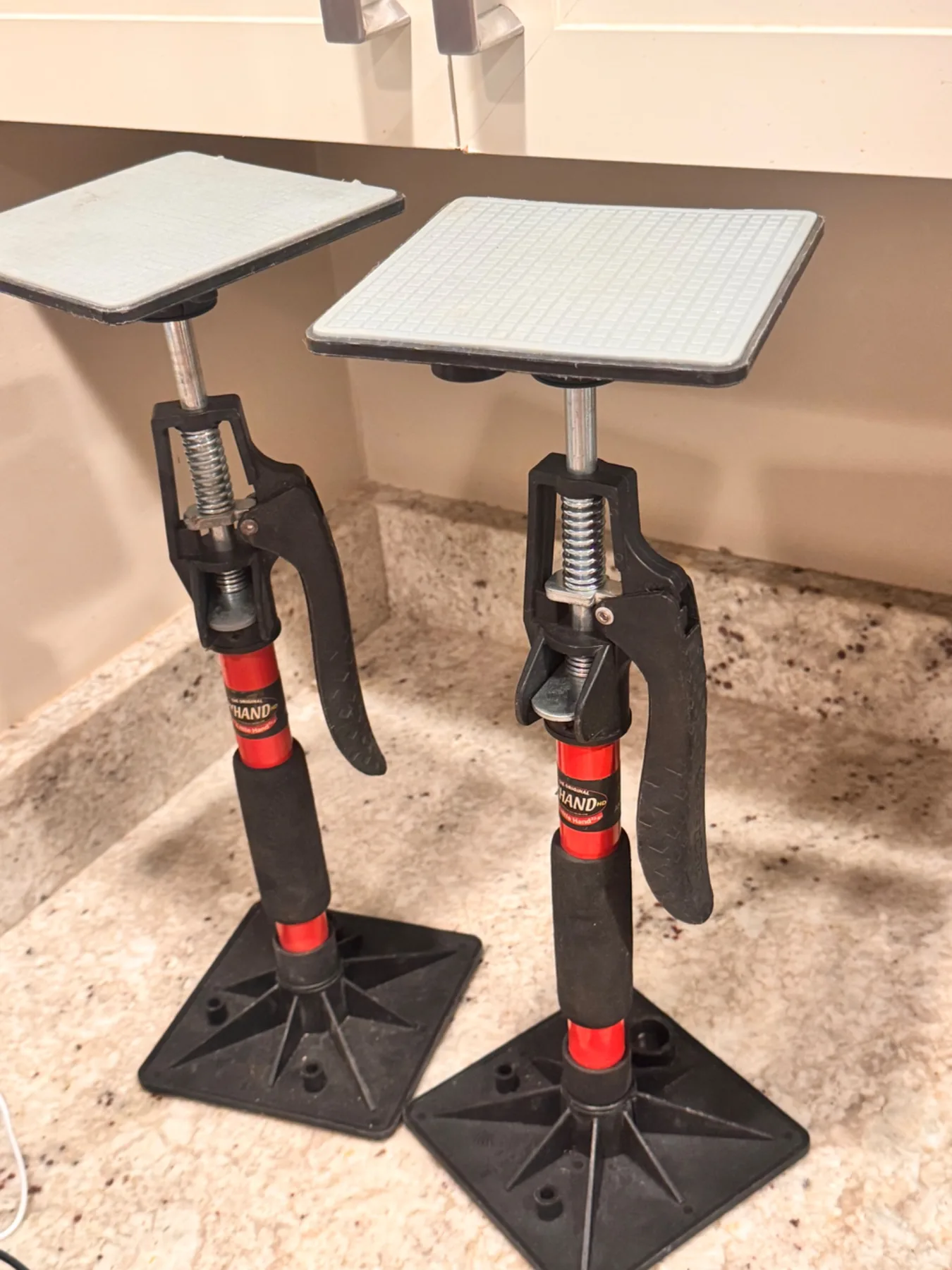
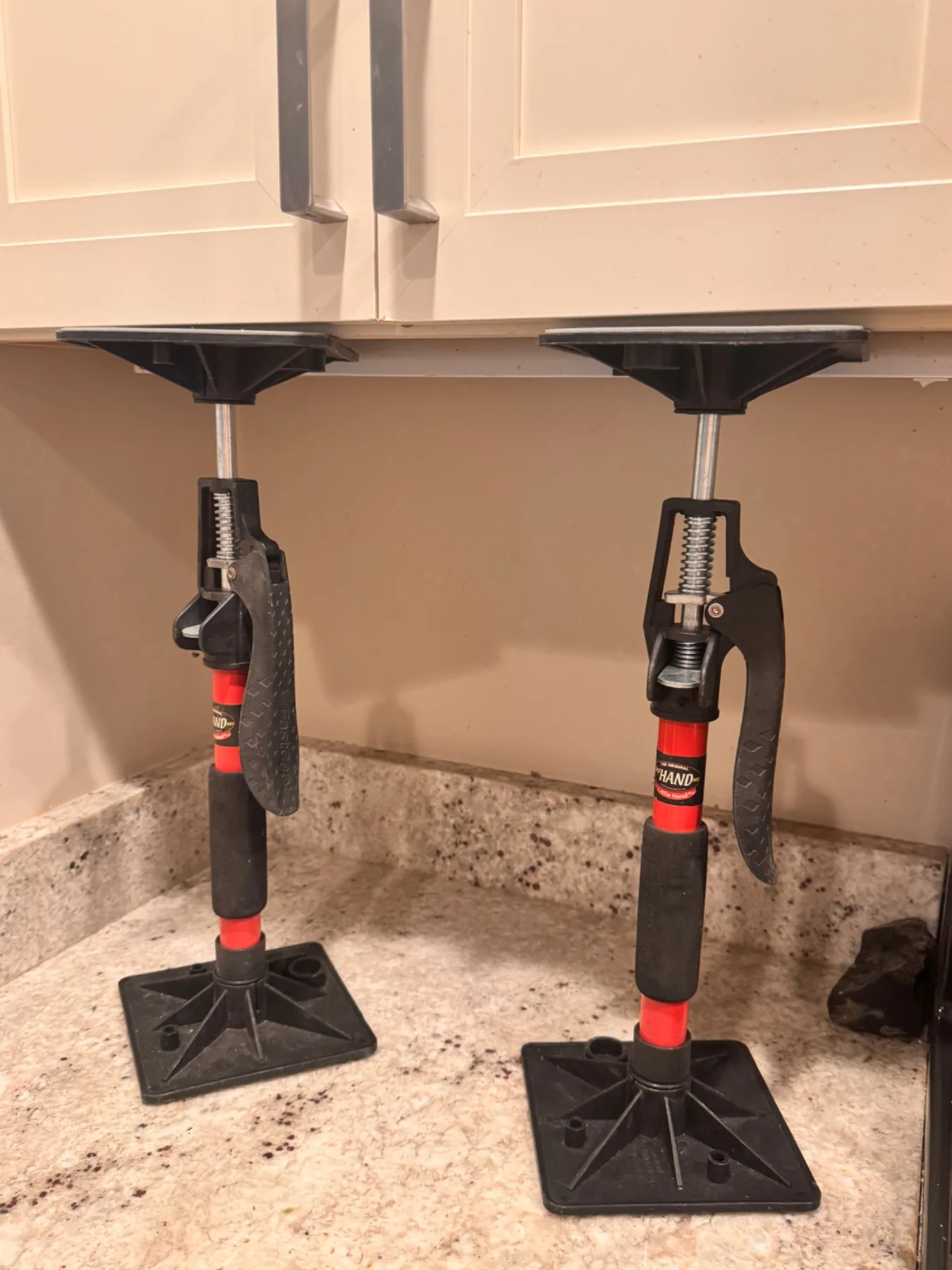
Supporting the weight is only part of the job. The useful part is being able to make small changes without having another person lift, lower and hold the cabinet every time you need another eighth of an inch or a slight adjustment.
We later found photos of the actual Little Hand supports we used. We generally used them as a pair under upper cabinets. Our pair was rated at 150 lb per support, and the small squeeze handle made it easy to micro-adjust the cabinet height while aligning and fastening. We estimate using them across roughly 20 cabinet installations.
Once locked in, they felt solid
We found both versions fairly straightforward to lock in place and did not have a recurring slipping problem once the supports were properly positioned.
The main thing to pay attention to is the initial pad placement. Sometimes you have to take an extra moment to make sure the end is sitting flat and where you want it before applying pressure. If an end is sitting at a poor angle or on an awkward surface, it can move during setup. Once properly planted and locked, this was mostly a non-issue for us.
Did the pads damage cabinets, ceilings or finished surfaces?
We did not notice the supports leaving marks on the ceilings or cabinets where we used them. Still, finish conditions vary. If we were working against a particularly delicate painted surface, expensive finished panel or anything we were worried about marring, we would add a layer of painter's tape, clean cloth or another suitable protective pad rather than assuming every surface will react the same way.
Compared with a support built on site
You can absolutely make a temporary support from lumber, and we have worked around site-built supports too. The advantage of the FastCap-style pole is convenience rather than some magical ability that lumber does not have.
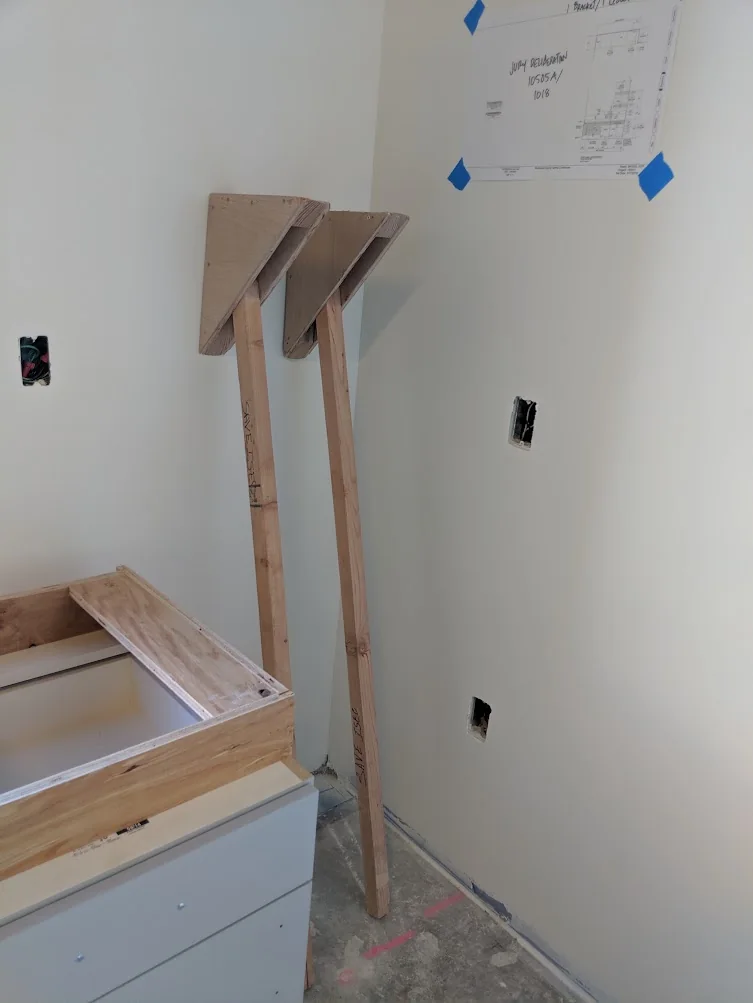
A wood brace can be cut to exactly what you need and may cost almost nothing when scrap material is available. The FastCap supports win on repeat use: collapse them, carry them to the next room or job, extend them again, and make fine adjustments without rebuilding anything.
The real value is when you do not have an extra person
These tools make the most sense when a task would normally be much easier with someone standing there holding material for you. They are not a replacement for another worker in every situation, and we would not use a support pole as an excuse to ignore safe lifting practices. But for temporary positioning and support, they can free both hands for measuring, drilling, checking a line or fastening.
That is why they earned a place in our installation workflow: not because the mechanism is complicated, but because the simple mechanism solves a common jobsite problem.
Would we specifically buy FastCap again?
Our experience with the FastCap versions was good: easy adjustment, solid locking, low weight and useful portability. We do not have firsthand evidence that FastCap is automatically better than every competing pole that uses the same general idea.
That distinction matters. We can recommend the FastCap tools based on what we actually used, but if we were replacing them today we would still compare current price, extension range, pad design and adjustment mechanism against other reputable support poles.
Which size would we choose?
The Little Hand is the obvious fit based on our experience. Its working range is much closer to the height where you actually need to support an upper cabinet.
The tall 3rd Hand is more useful when you need to brace between the floor and a ceiling or another high support point.
If you regularly do both cabinets and higher trim/valance work, the two sizes complement each other rather than being substitutes.