This review is based on years of firsthand professional use. The Bosch GLL 100 GX shown throughout this page is the actual unit we used on cabinet-installation and finish-carpentry work, and the jobsite photos are our own.
Quick verdict
One of the jobsite tools we would buy again.
The Bosch GLL 100 GX gave us a bright green horizontal and vertical reference, a genuinely useful magnetic mount, reliable self-leveling, good AA-battery life and years of dependable interior jobsite use without a noticeable accuracy problem.
What we liked
- Green beam was easy to see indoors
- Excellent for long cabinet runs
- Horizontal and vertical cross-line modes
- Magnetic mount was extremely useful
- Good battery life from 3 AA batteries
- Rugged enough for real jobsite use
- Protective pouch made storage easy
- Never needed recalibration in our experience
What could be better
- Mounting can get awkward when there is nothing magnetic nearby
- A tripod would have made some setups faster
- Like most visible lasers, bright outdoor sunlight is not its ideal environment
The exact laser we used
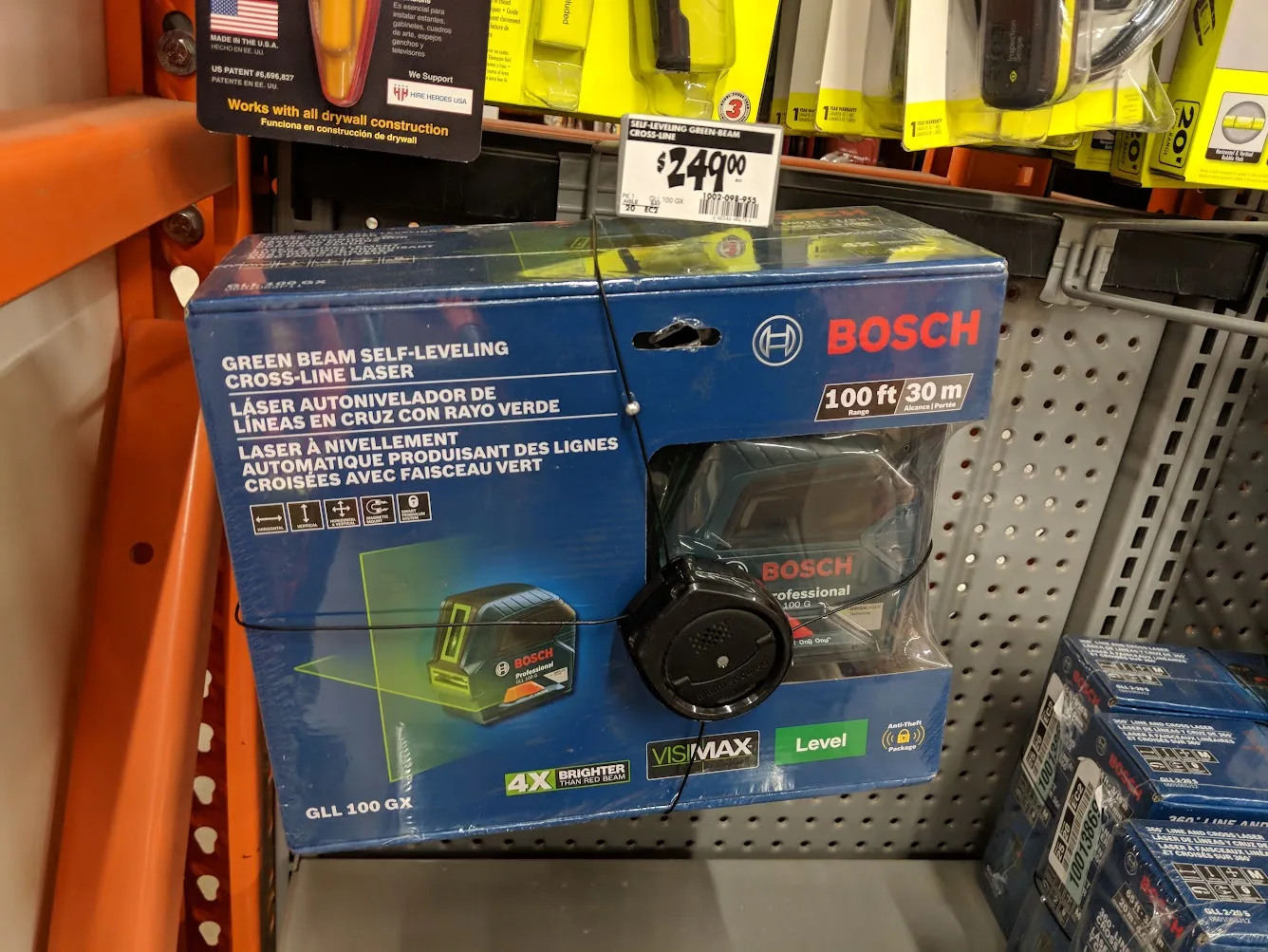
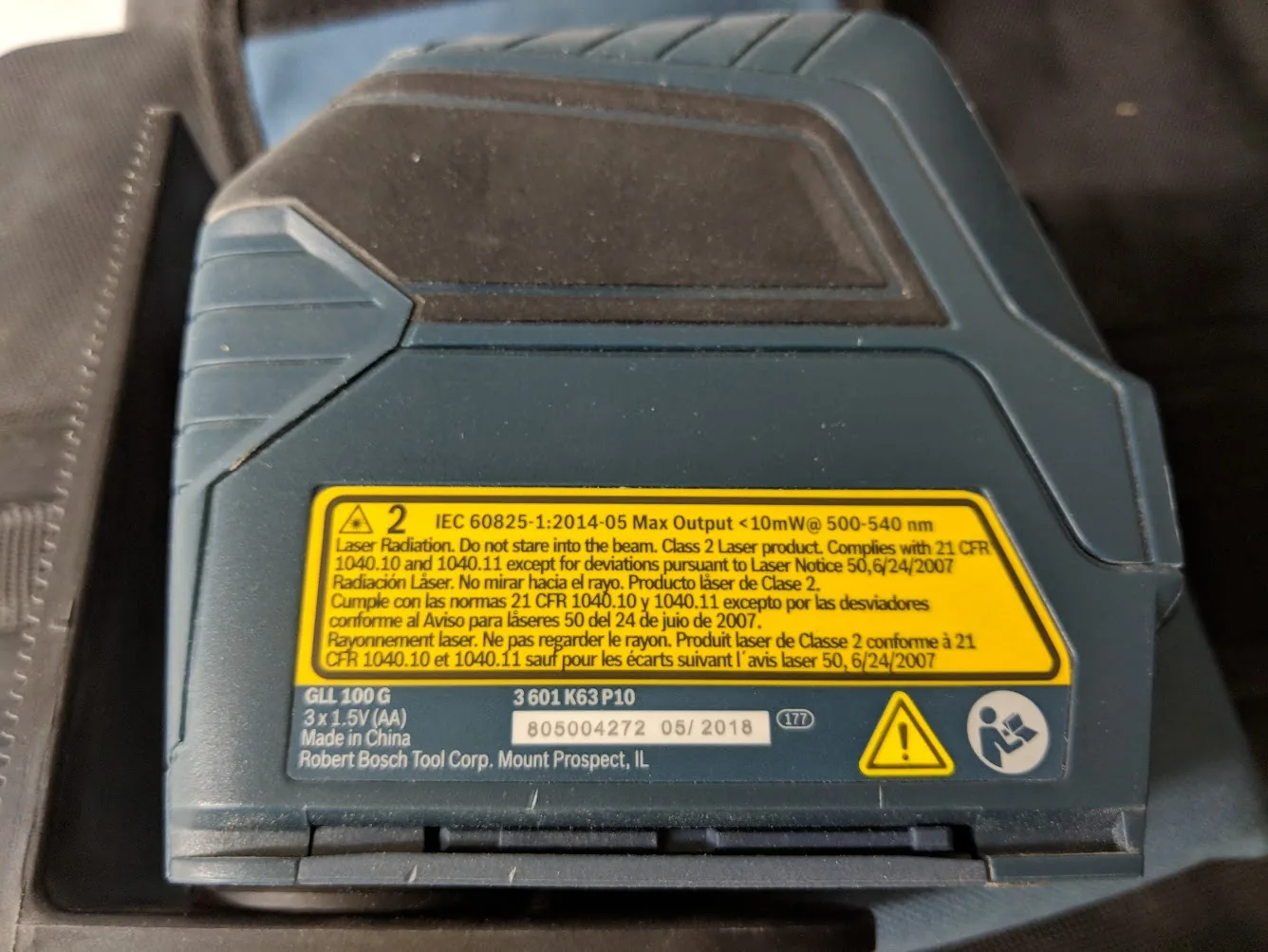
Our unit is the Bosch Professional GLL 100 GX, a green-beam self-leveling cross-line laser. The packaging identifies a 100-foot class range, and the label on our unit shows that it runs on three AA batteries.
Why it worked so well for cabinet installation
This was not a laser that sat in a garage waiting for an occasional picture-hanging project. We used it for professional cabinet and finish work, including large commercial rooms.
We used the horizontal line to establish cabinet height and keep long runs on the same reference. We also used it with a tape measure to find high and low spots in floors, check cabinet-door and drawer-front alignment, lay out hardware, and create straight horizontal or vertical references for drilling.
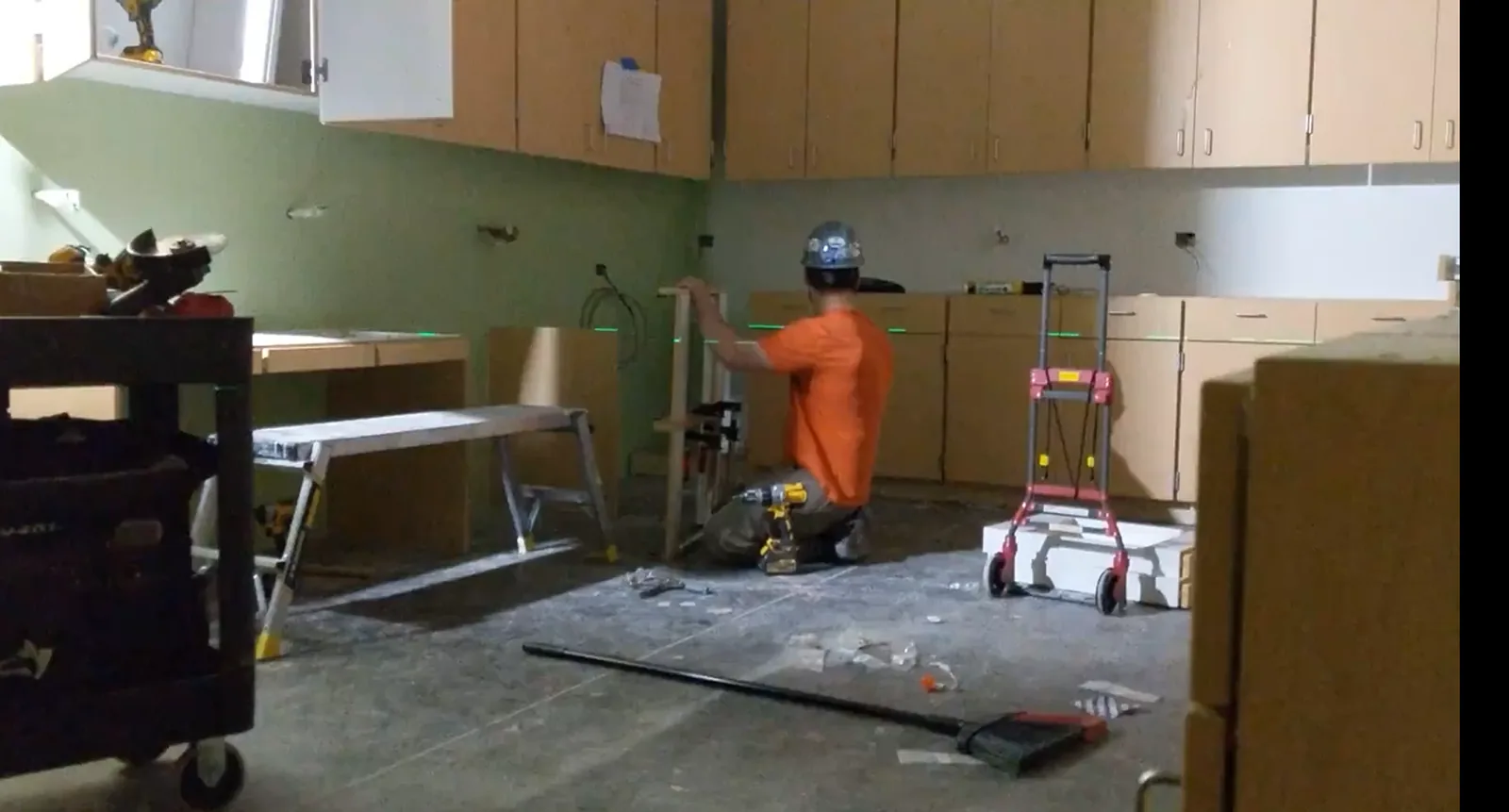
This is exactly why a cross-line laser earns its keep: one reference line can run across a long bank of cabinets while you work.
For floor variation, the laser and a tape measure work together. Establish a fixed laser plane, take measurements down to the floor at multiple locations, and the changing measurements reveal the relative high and low areas that matter when you are laying out a cabinet run.
It was useful well beyond setting cabinet height
Once cabinets were installed, we could use the beam as a quick visual reference for the finish work too. A straight line across doors and drawer fronts made small alignment differences easier to spot. Vertical mode was useful when laying out hardware or drilling points that needed to stay on the same line.
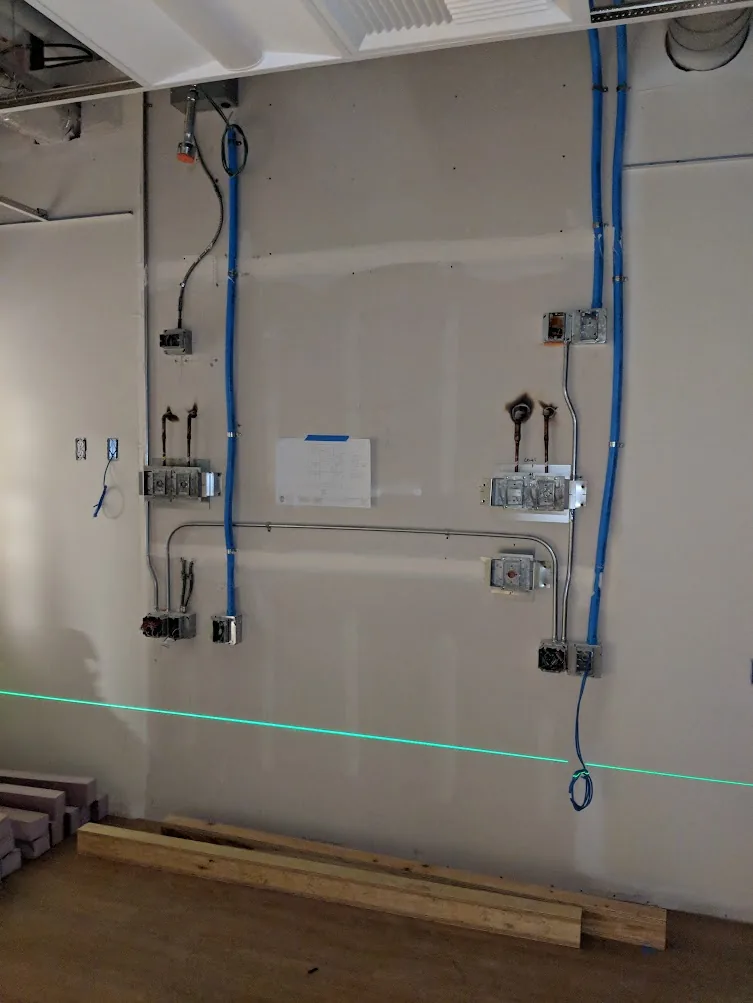
The green horizontal line remained easy to follow across large interior spaces.
Green-beam visibility was excellent indoors
For our interior work, the green line was easy to see roughly 99% of the time, including across larger rooms and brightly lit commercial spaces. That was one of the things we liked most about this laser.
We would not buy it specifically to project a visible line across a jobsite in bright direct sunlight. Outdoor visibility is a very different challenge. But for the interior cabinet and finish work we actually did, visibility was rarely an issue.
The magnetic attachment was one of the best features
The magnetic mount was genuinely useful on jobsites. When a steel stud, metal corner, cabinet hardware, support or other suitable metal surface was available, it was quick to put the laser where we needed it and make small positioning changes.
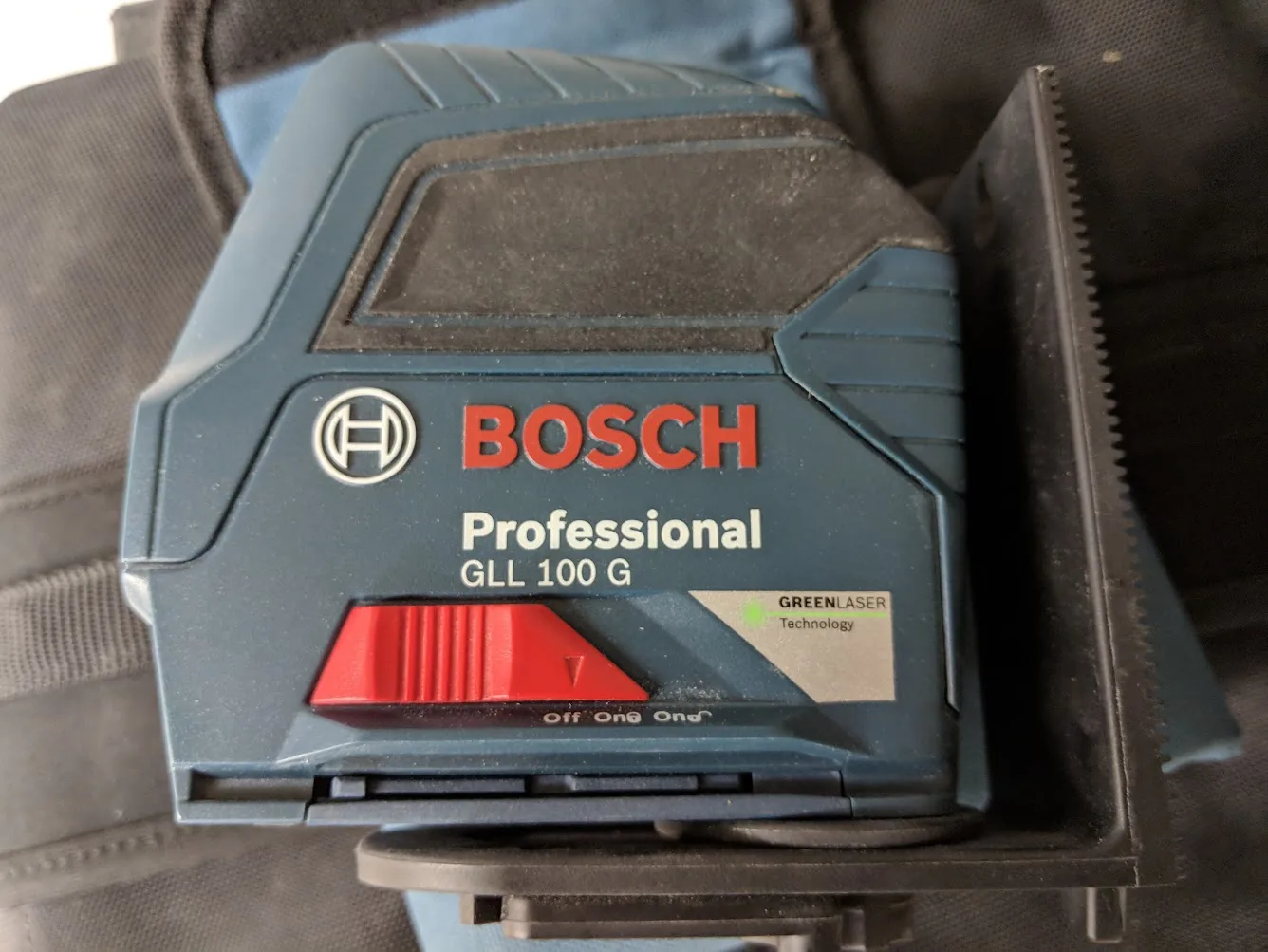
Our GLL 100 GX and mounting setup after years of use.
The limitation is obvious once you work in enough rooms: sometimes there simply is not a convenient magnetic surface at the height or location you need. We have improvised mounting locations more than once. That is why, if we were setting up the kit again, we would add a compact tripod from the beginning.
Bosch BT150 tripod we would add ↗Battery life: good, but carry spares anyway
The laser runs on three AA batteries. We found battery life very good and never considered power consumption a major weakness. Still, AA batteries are cheap enough that we would always keep an extra set in the tool bag. A dead laser in the middle of layout work is an avoidable problem.
Example AA battery pack ↗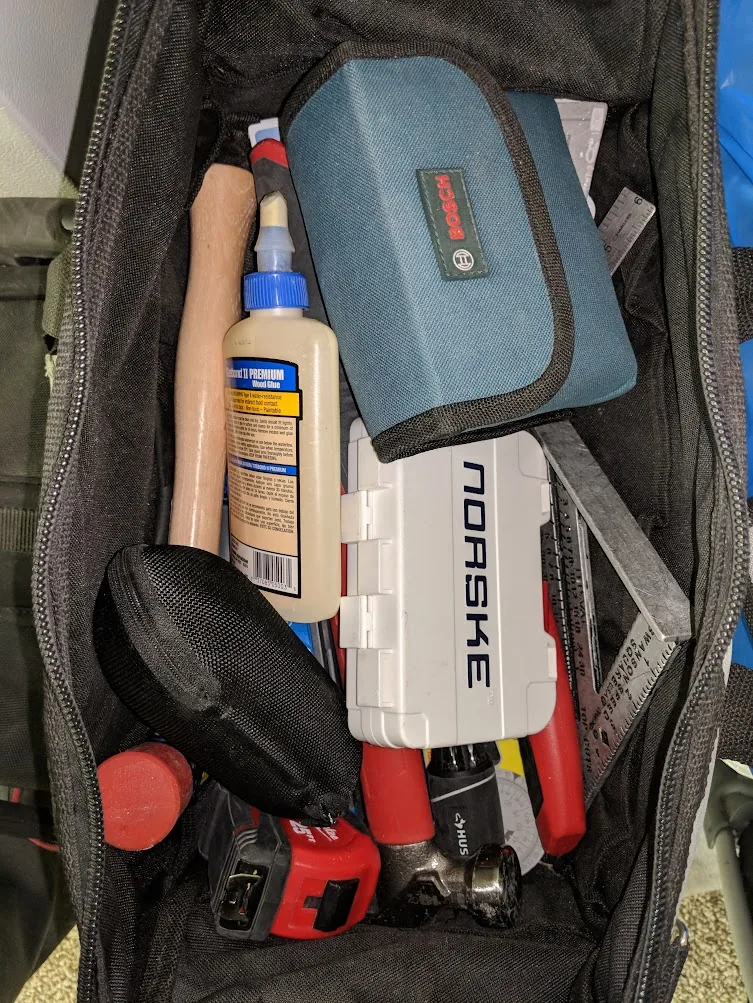
The Bosch pouch lived with the rest of our working tools; keeping spare AA batteries in the same bag is easy insurance.
It held up to actual jobsite treatment
We did not baby this laser. It lived with the rest of our carpentry tools and was carried from job to job. It has probably been knocked or dropped at some point, but we never had a resulting reliability problem.
We never noticed the projected line becoming inaccurate and never had to recalibrate the unit during our use. That is one of the biggest reasons we trust it.
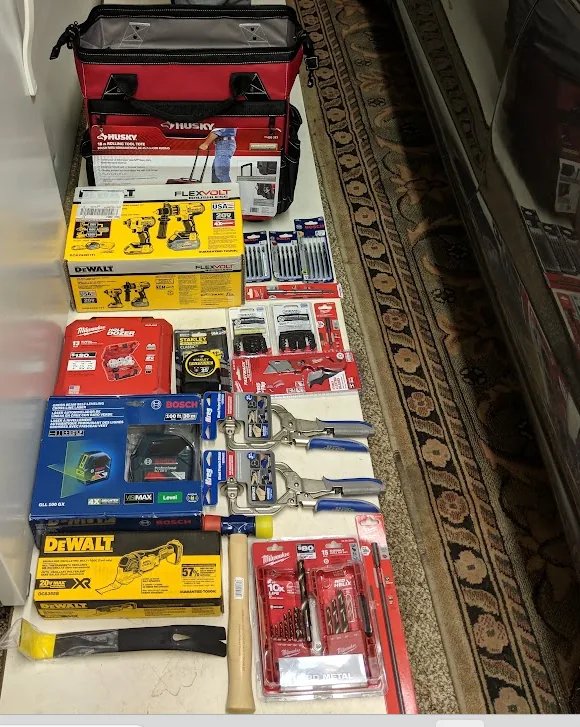
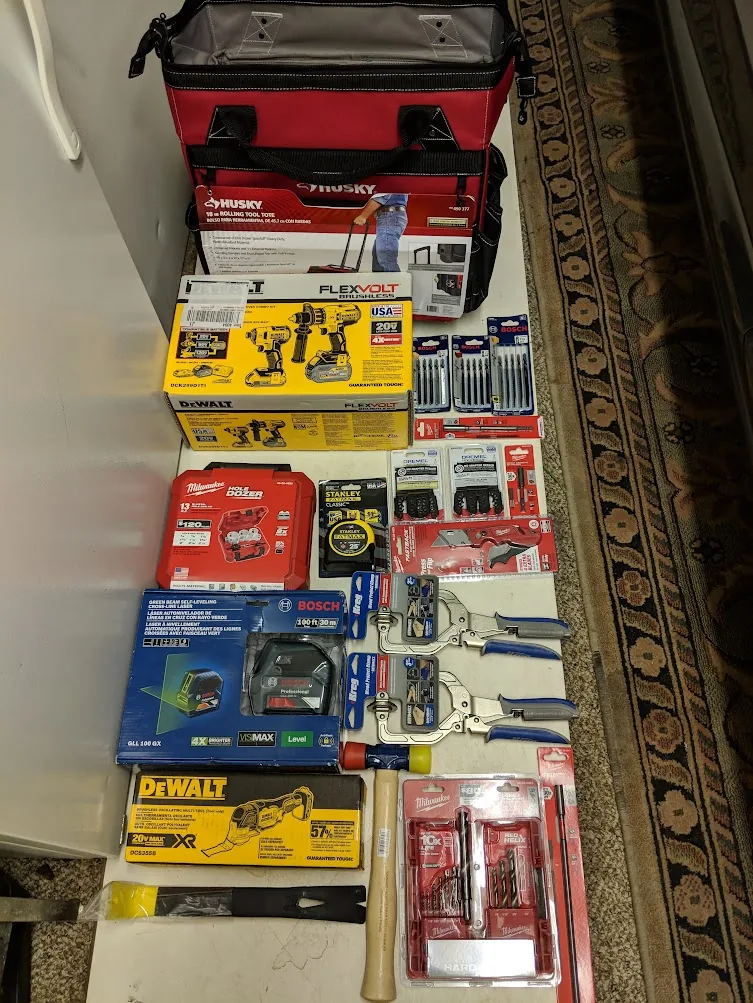
Horizontal + vertical lines made it much more useful
The cross-line capability is what made this tool useful for more than simply checking level. Horizontal mode handled cabinet heights, long runs and alignment. Vertical mode helped create straight references for drilling and layout. Using both together gave us a visible square reference in the room when the job called for it.
That versatility is why we would choose a cross-line laser again rather than a tool that only projects a horizontal line.
Would we buy another Bosch?
If this laser failed tomorrow, we would be comfortable buying another Bosch. Ours was easy to see, easy to mount, accurate in our experience, durable, and genuinely useful for the work we were doing.
That does not mean everyone needs this exact discontinued/older model. The important takeaway is what we would look for in its replacement: a bright green beam, self-leveling cross-line operation, a strong magnetic mount, tripod compatibility, simple controls and a protective case or pouch.
Who this kind of laser is best for
Excellent for long horizontal reference lines, floor variation checks and finish alignment.
Useful for hardware, trim, layout and repeated reference points across a room.
More capability than a basic bubble level when a project spans multiple walls or elevations.
We would look carefully at outdoor visibility needs before choosing any visible-line laser primarily for direct sun.