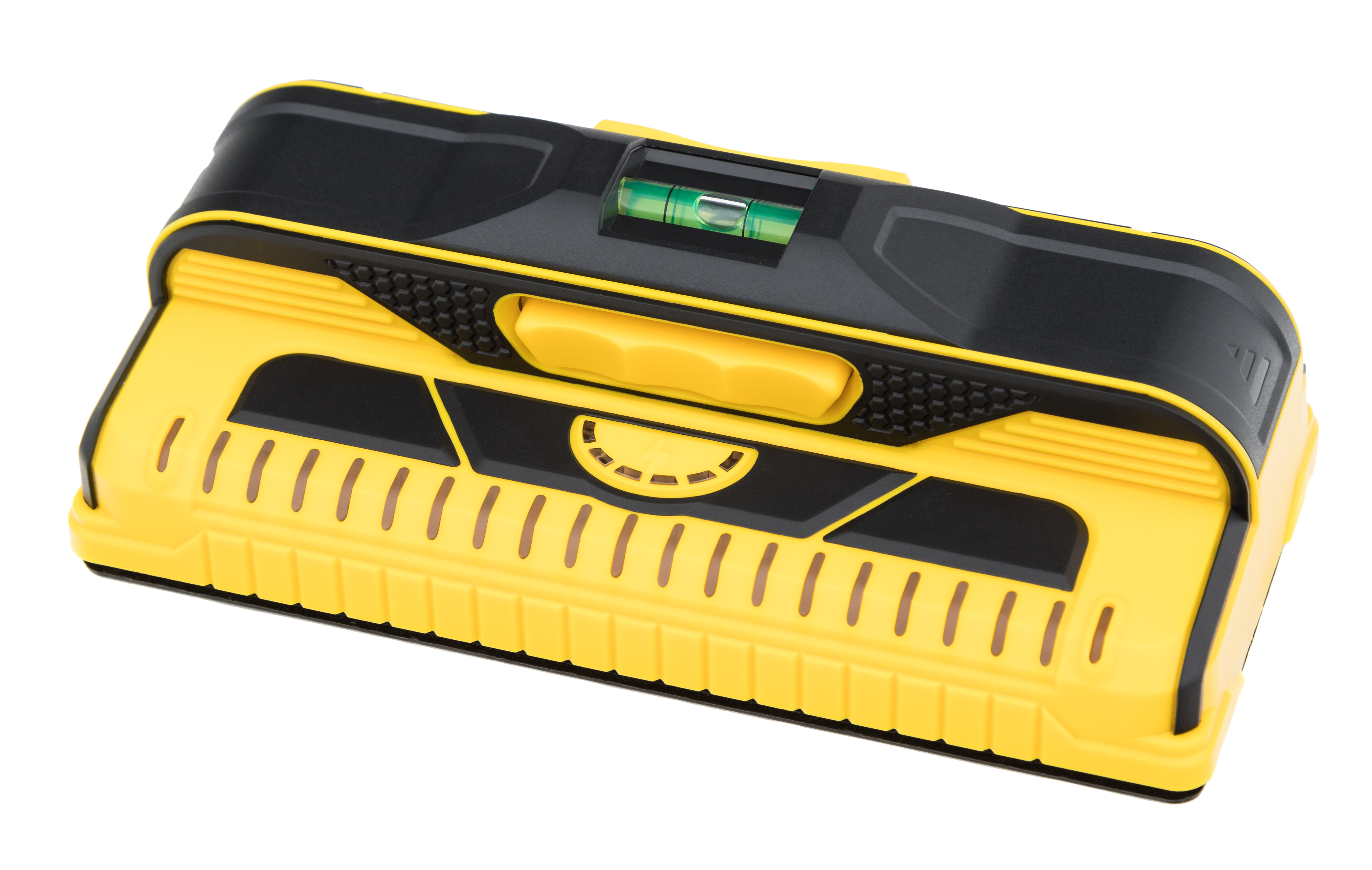
Our top pick is not just a researched recommendation: we have owned and used the exact Franklin Sensors ProSensor M210 since 2018 for cabinet installation, wall mounting and home projects. The other products in this guide are research-based comparisons using manufacturer documentation, manuals, warranty terms and recurring owner feedback. We clearly separate what we have personally used from what we have only researched.
Our recommendations at a glance
Stud finders range from simple edge detectors to wide multi-sensor tools and phone-based wall imagers. The right choice depends on whether you are hanging one photo, installing cabinets, mounting a television or trying to identify metal and wiring in a complicated wall. No electronic finder guarantees that a wall is safe to drill; confirmation from more than one method is the professional habit.
| Award | Product | Typical price | Best reason to buy |
|---|---|---|---|
| Best budget | Zircon StudSensor HD55 | About $20–$30 | Basic edge finding for occasional DIY |
| Best overall | Franklin Sensors ProSensor M210 | About $55–$80 | Wide 13-sensor display with center indication |
| Best multi-material | Zircon MultiScanner A200 | About $55–$90 | Stud, metal and live-wire modes |
| Best visual scanner | Walabot DIY 2 | About $100–$180 | Phone-based wall visualization |
| Best low-tech companion | Rare-earth magnet | Under $20 | Finds drywall fasteners without calibration |
1. Zircon StudSensor HD55
A basic Zircon is inexpensive and useful for occasional drywall projects, but it requires careful calibration and repeated passes to mark both edges.
Pros
- Low cost
- Widely available
- Simple for picture hanging and shelves
- Long manufacturer warranty
Cons
- Edge finding requires multiple passes
- More sensitive to technique and wall texture
- Limited information compared with wide sensor arrays
2. Franklin Sensors ProSensor M210
The M210 is fast because it shows the stud area across a wide display rather than asking the user to hunt for one edge at a time.
We have owned and used the exact Franklin Sensors ProSensor M210 since 2018. It has been used on jobsites for cabinet installation and at home for hanging photos and wall-mounting TVs. Its wide display makes it faster to see the stud area. For important fastening points, we still confirm the location at more than one height and often use a magnet as a second method.
Pros
- Easy to understand visual indication
- Shows center and edges together
- Fast for repeated wall layout
- Strong choice for cabinets and TV mounts
Cons
- Costs more than basic edge finders
- Live-wire detection is only a warning aid—not a guarantee
- Wide readings can be confusing around closely spaced framing or wall anomalies
3. Zircon MultiScanner A200
The A200 is a better fit than a basic stud finder when projects involve metal framing, pipes or deeper scanning, although every mode adds technique and interpretation.
Pros
- Multiple detection modes
- Center and edge indication
- Established documentation and support
- Useful for mixed-material projects
Cons
- More mode switching and calibration
- Still cannot prove a wall is safe to drill
- Readings can vary with wall construction
4. Walabot DIY 2
Walabot offers a different style of information: a visual phone display rather than LEDs. It can help on complicated drywall, but it is more expensive, requires calibration and is not universally reliable on every wall type.
Pros
- Visual interface can be intuitive
- Potentially useful for pipes and wires
- Advanced mode for complicated projects
- Rechargeable
Cons
- Phone compatibility and app dependence
- More setup and calibration
- Mixed owner feedback on plaster and lath
- High cost for occasional use
5. Rare-earth magnet with protective tape
A strong magnet is a remarkably effective companion because drywall fasteners usually reveal the stud line. It is slow for broad scanning but excellent for confirmation.
As a journeyman carpenter installing cabinets, we used a rare-earth magnet roughly an inch or so long and wide. Painter’s tape on the contact side helped protect the finished wall, and the magnet was stored in a small film-canister-sized container. After locating one fastener, we checked vertically for another before committing to cabinet fasteners.
Pros
- Cheap and dependable
- No false electronics or dead batteries
- Easy to keep in a tool bag
- Useful when electronic readings are uncertain
Cons
- Finds fasteners, not the stud itself
- Can miss screws set deep or covered heavily
- Does not reveal pipes or wiring
Detailed buying guide
- For heavy loads, locate and confirm the same stud at multiple heights.
- Live-wire indicators are supplemental. Turn off circuits when appropriate and use proper electrical detection procedures.
- Plaster, foil insulation, tile, lath and unusual framing can confuse any finder.
- A magnet plus a wide electronic sensor is a practical two-method combination for standard drywall.
Affiliate links and availability
Retail links will be added or updated as Gear Arena is approved by relevant affiliate programs. We may earn a commission from qualifying purchases at no added cost to you. A retailer button never determines which product wins. Confirm current specifications, compatibility, warranty and price before purchasing.
Sources
Manufacturer documentation is the primary source for specifications and warranty language. Dynamic prices are shown as broad typical ranges rather than guaranteed prices.
- Franklin Sensors M210 official page
- Franklin M210 operating instructions
- Zircon MultiScanner A200 official page
- Bosch GCL165-42GL official page
- Walabot DIY 2 official page
See our full methodology, editorial policy and affiliate disclosure.