Why a Meldekarte can matter
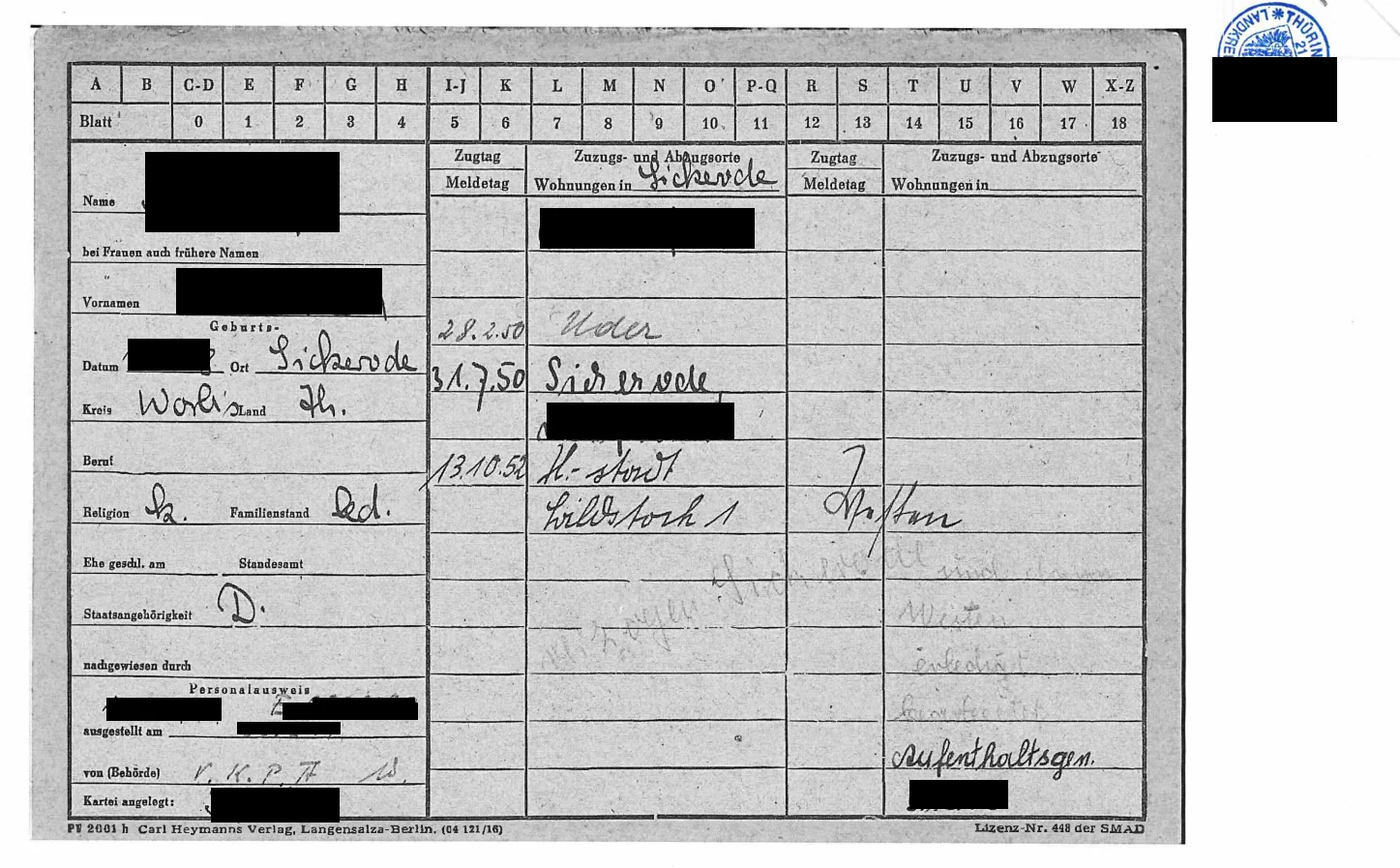
Historical registration cards can help document where a person lived, family relationships, names used at the time and sometimes other administrative details. They can be useful supporting evidence when reconstructing a family's timeline.
Our initial request
We asked for a historical certified registration extract, identified the person by birth and married names, gave the date/place of birth, approximate years in the city, a known address and marriage information, and asked whether historical passport information might also survive.
What helped when the search took time
When there was no immediate answer, we followed up politely and supplied additional historical documents showing old addresses and passport information. The city later told us it had located a microfilmed Meldekarte, but a technical problem with its viewing equipment delayed access.
Give every useful name and address variant
For older files, we found it useful to provide former surnames, married/adopted names, known addresses, spouse information and the approximate residence period. A record may be filed under a family member rather than under the person you expect.
What the office could not find
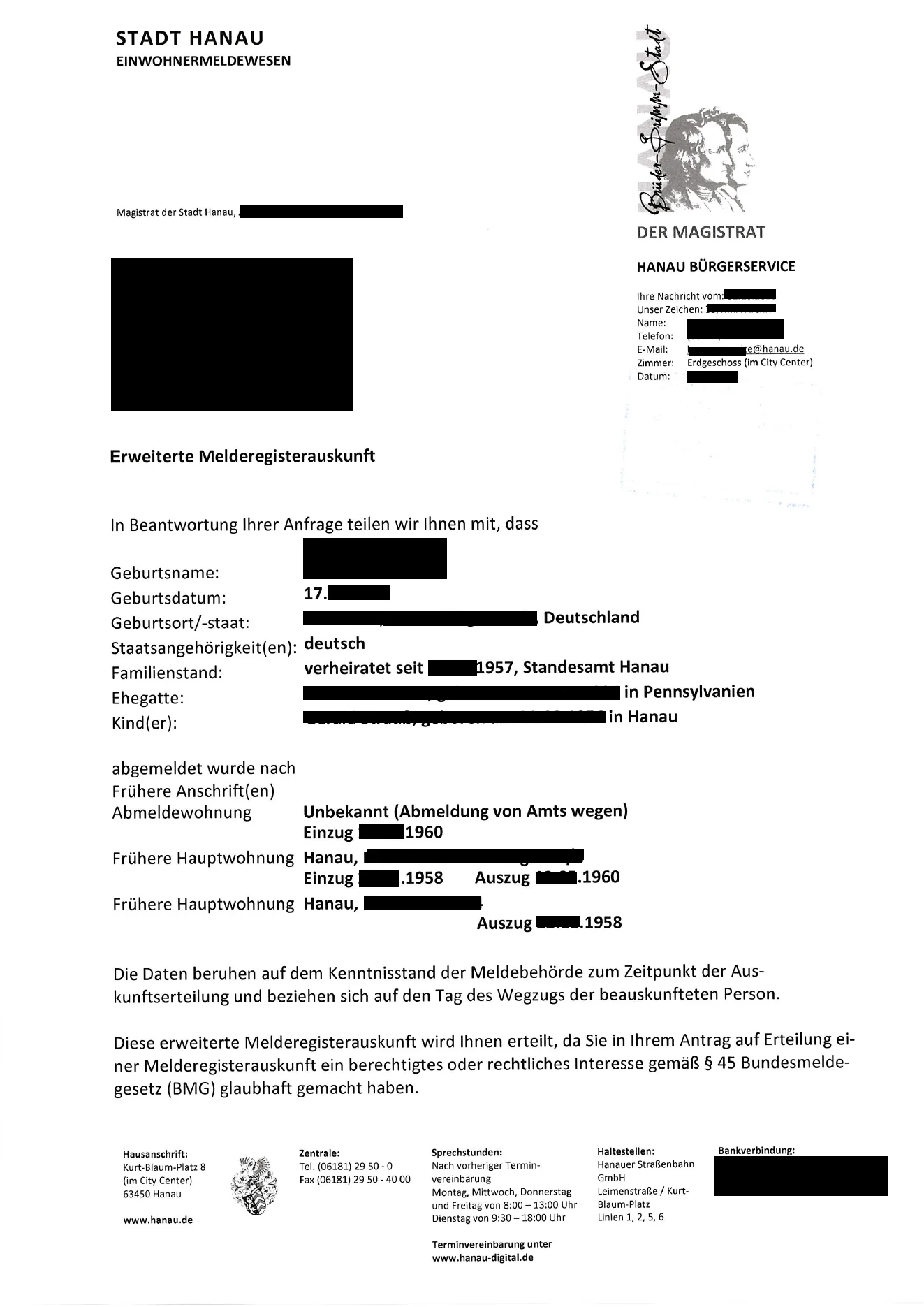
After additional questions, the city confirmed that it had only the archived family registration card it had already found; it did not have a separate card under the later surname and could not confirm old passport issuance from that record. A Meldekarte can be valuable without being a complete archive of every document ever issued.
Ask about related records—but don't assume
Once you have the right archive or Standesamt, a concise question about related marriage, death or registration holdings can sometimes point to the next record. Whether the same office holds it depends on place, date and archival transfer rules.
How the certified Hanau record was later used at the Embassy
The redacted Hanau registration evidence. The certified copy mattered later because the consular employee checked the issuing authority's certification rather than relying on a casual scan.
In October 2026, I brought the certified Hanau Meldekarte to my German birth-registration appointment in Washington. It helped document my father's connection to Hanau after I had already contacted the Standesamt and received written confirmation that Hanau could handle the case.
The consular employee did not simply glance at the front. She checked the reverse of the German records for the issuing authority's certification stamp/signature. That turned the earlier archive request into something much more concrete: an officially certified residence record we could actually use in a later German administrative process.
Official sources
- German Missions in the United States — Citizenship
- German Missions — Citizenship FAQ
- German Missions — Certificate of Citizenship
Government procedures change. We verify procedural claims against official sources and label our own experience separately. The receiving German authority controls what is required in an individual case.