Gear Arena compared manufacturer specifications, manuals, warranty terms, retailer availability, reputable independent information and recurring owner feedback. Recommendations are organized by price level and intended user. Products personally used by our team are identified in separate Our experience sections; we do not claim hands-on testing where it did not occur.
Our recommendations at a glance
A portable inflator should match the way you actually use it. A driver who wants a simple trunk tool for seasonal top-offs does not need the same machine as an SUV owner inflating larger tires or a contractor already invested in a cordless battery platform. We compared power source, hose and cord reach, duty cycle, inflation speed, warranty, storage, display design and everyday convenience.
| Award | Product | Typical price | Best reason to buy |
|---|---|---|---|
| Best budget | AstroAI AIRUN H1 12V | Under $40 | Simple, readable and useful for routine top-offs |
| Best mid-tier | VIAIR 88P | About $70–$100 | A stronger 12V compressor for SUVs and larger tires |
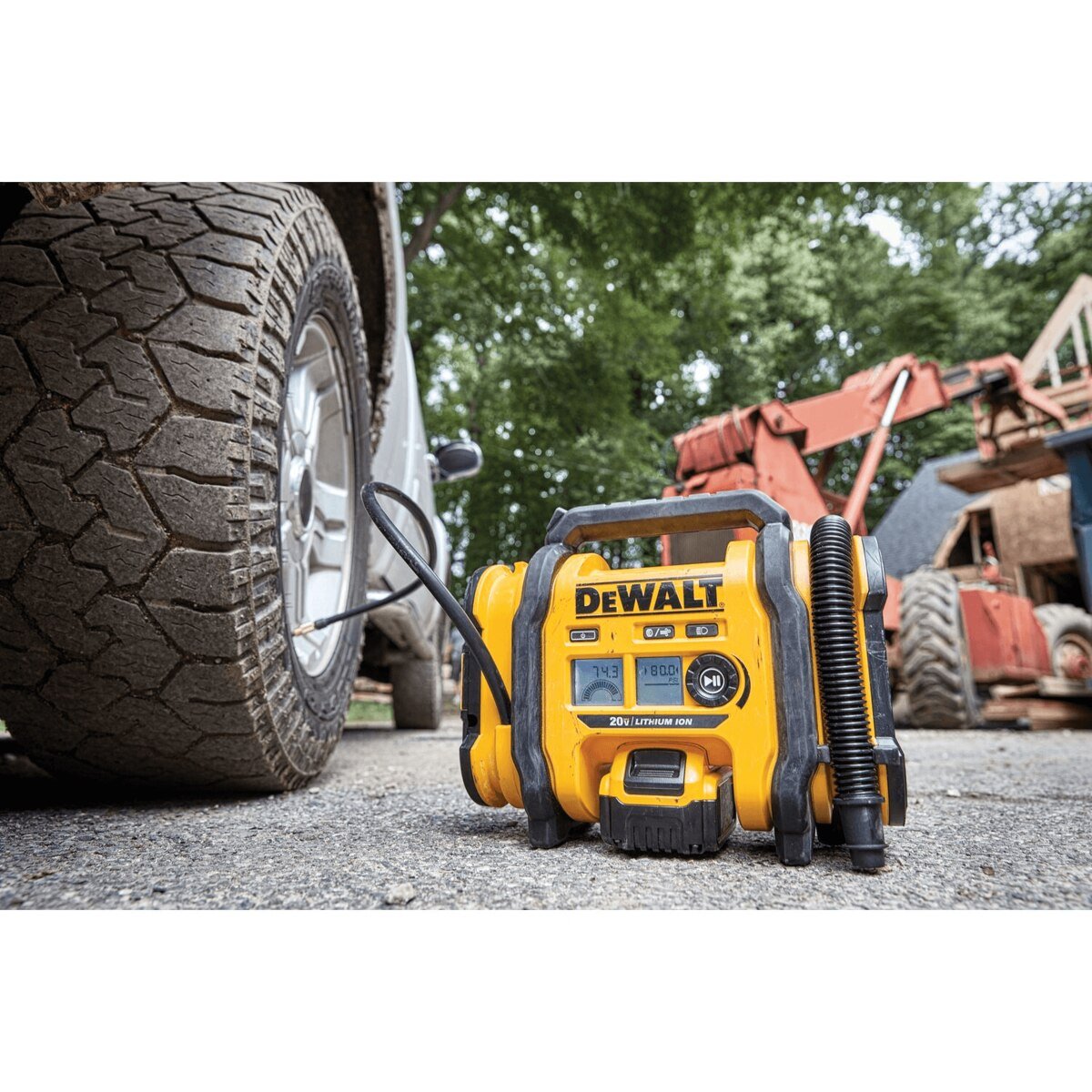
| Best premium versatility | DEWALT DCC020IB | About $120–$170 tool-only | Three power options and high/low-volume modes |
| Best premium speed | Milwaukee M18 2848-20 | About $170–$230 tool-only | Fast output for SUVs, light trucks and repeat use |
| Best compact cordless | Fanttik X8 APEX | About $70–$110 | Rechargeable and easy to store |
1. AstroAI AIRUN H1 12V
It covers the basic job without asking casual users to buy into a battery platform. Its strongest use case is topping off passenger-car tires and inflating recreational items near a vehicle.
We used this inflator about five times during winter for children’s snow tubes and also to top up a low car tire. The display was easy to read, inflation felt quick, and operation was straightforward. The main drawback was reach: the cord could be slightly longer, and a rechargeable option would make it more useful away from the vehicle.
Pros
- Low purchase price
- Clear digital display
- Automatic stop makes routine inflation simple
- Compact enough to leave in the car
Cons
- Must remain connected to a 12V outlet
- Cord could be longer
- Not the best choice for repeated large-truck tires
2. VIAIR 88P
The 88P is more compressor-like than a tiny glove-box pump. It sacrifices cordless convenience for stronger airflow and a useful duty cycle, making it better suited to SUVs, crossovers and larger tires.
Pros
- Higher airflow than many compact pumps
- Direct battery connection avoids weak accessory sockets
- Good middle ground for larger tires
- Established compressor brand
Cons
- More setup than a cigarette-lighter inflator
- Not cordless
- No battery-platform versatility
3. DEWALT DCC020IB
DEWALT wins on flexibility. It can top off tires, inflate mattresses and sports gear, and run from more than one power source. It is especially logical for households already using 20V MAX batteries.
Pros
- Three possible power sources
- Useful high-volume inflate/deflate function
- Durable high-pressure hose
- Strong warranty package
Cons
- Battery and AC adapter may add cost
- Larger than compact rechargeable units
- Not the fastest choice for repeated truck tires
4. Milwaukee M18 Inflator 2848-20
Milwaukee is the performance pick. It is heavier and more expensive than casual-use inflators, but the output, hose length, pressure memory and battery ecosystem make sense for frequent use.
Pros
- Fast inflation for medium-duty tires
- Long hose
- Four pressure-memory slots
- Strong five-year warranty
Cons
- Expensive for occasional household use
- Battery sold separately in many packages
- Seven-pound tool-only weight is not glove-box compact
5. Fanttik X8 APEX
The X8 APEX is about portability rather than sustained compressor duty. It is a convenient travel option for passenger-car top-offs, bicycles and balls.
Pros
- No cord during use
- Easy to store and carry
- Simple preset controls
- Useful for bikes and recreational gear
Cons
- Battery must be kept charged
- Less suited to repeated large-tire inflation
- Internal battery will eventually age
Detailed buying guide
- Choose power source before chasing maximum PSI. Most passenger tires need far less than 150 PSI; airflow, heat control and reach matter more.
- A 12V model is dependable as long as the vehicle has power. A rechargeable model is more portable but requires a charging routine. Tool-battery models are best when you already own compatible batteries.
- For SUVs and trucks, look for published airflow, duty cycle and a hose long enough to reach comfortably.
- Automatic shutoff is useful, but periodically verify with a separate gauge. Inflate to the driver-door placard, not the tire-sidewall maximum.
Affiliate links and availability
Retail links will be added or updated as Gear Arena is approved by relevant affiliate programs. We may earn a commission from qualifying purchases at no added cost to you. A retailer button never determines which product wins. Confirm current specifications, compatibility, warranty and price before purchasing.
Sources
Manufacturer documentation is the primary source for specifications and warranty language. Dynamic prices are shown as broad typical ranges rather than guaranteed prices.
- DEWALT DCC020IB official page
- Milwaukee M18 Inflator official specs
- Milwaukee launch specifications
- VIAIR 88P official page
- VIAIR warranty FAQ
See our full methodology, editorial policy and affiliate disclosure.